

The Setup:
The 1989 abduction
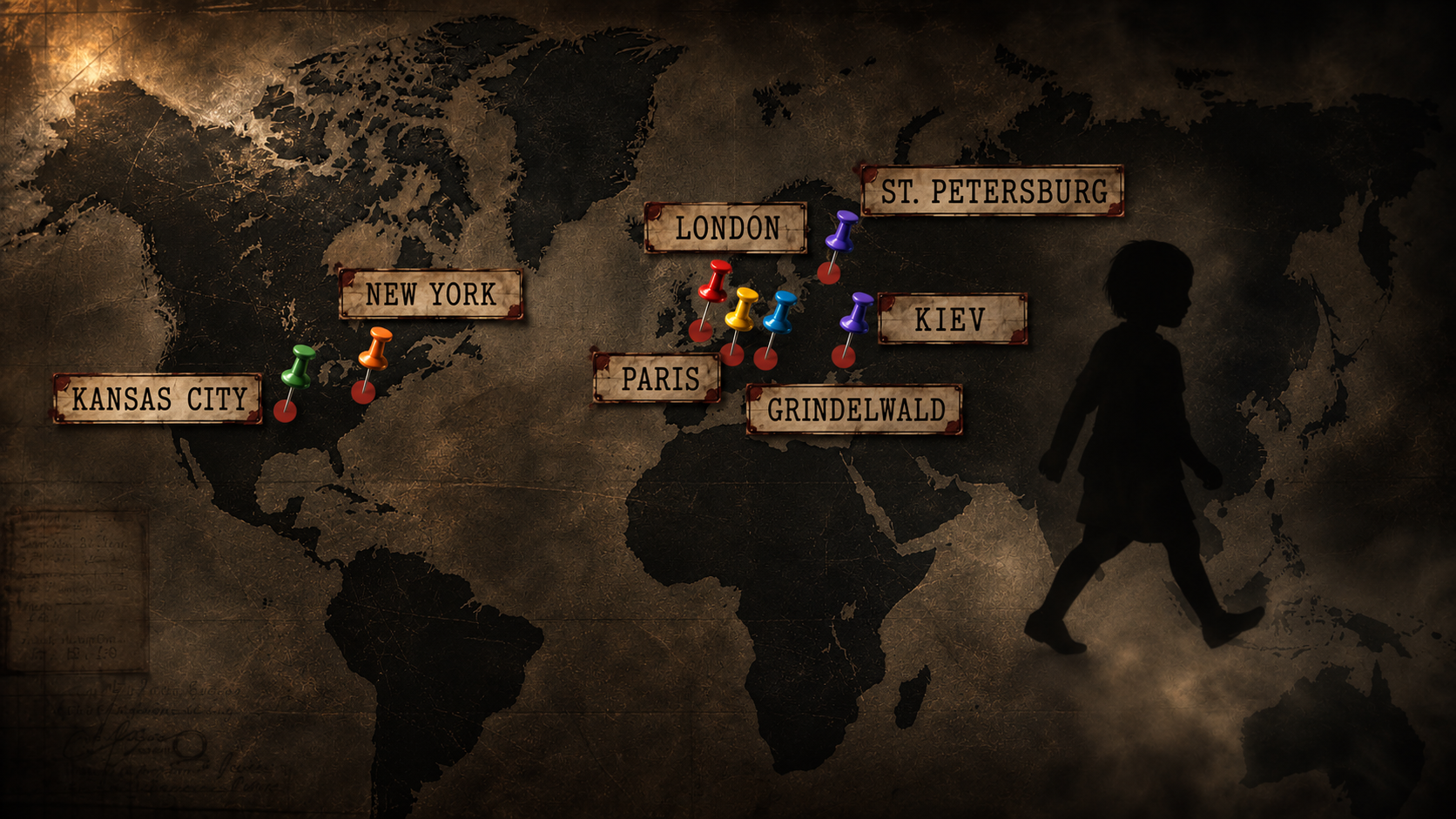
Victoria Cameron’s story begins in London in 1989 and unfolds across multiple countries, including Kiev, Paris, New York, and Kansas City. What followed was a coordinated pattern of trafficking, control, and survival—events she is now preparing to document in her forthcoming memoir, Scotland’s Les Misérables.
This is a brief overview of Victoria’s testimony.
A note on testimony and allegations:
This account presents a very brief summary of Victoria Cameron’s firsthand recollections, together with information she remembers being communicated to her by others within contextual material. Where named individuals are described in connection with alleged criminal or abusive conduct, those descriptions reflect Cameron’s testimony. References to what individuals said, intended, believed, or were connected to are presented as recollections, allegations, or interpretations rather than independent judicial findings.
The backstory
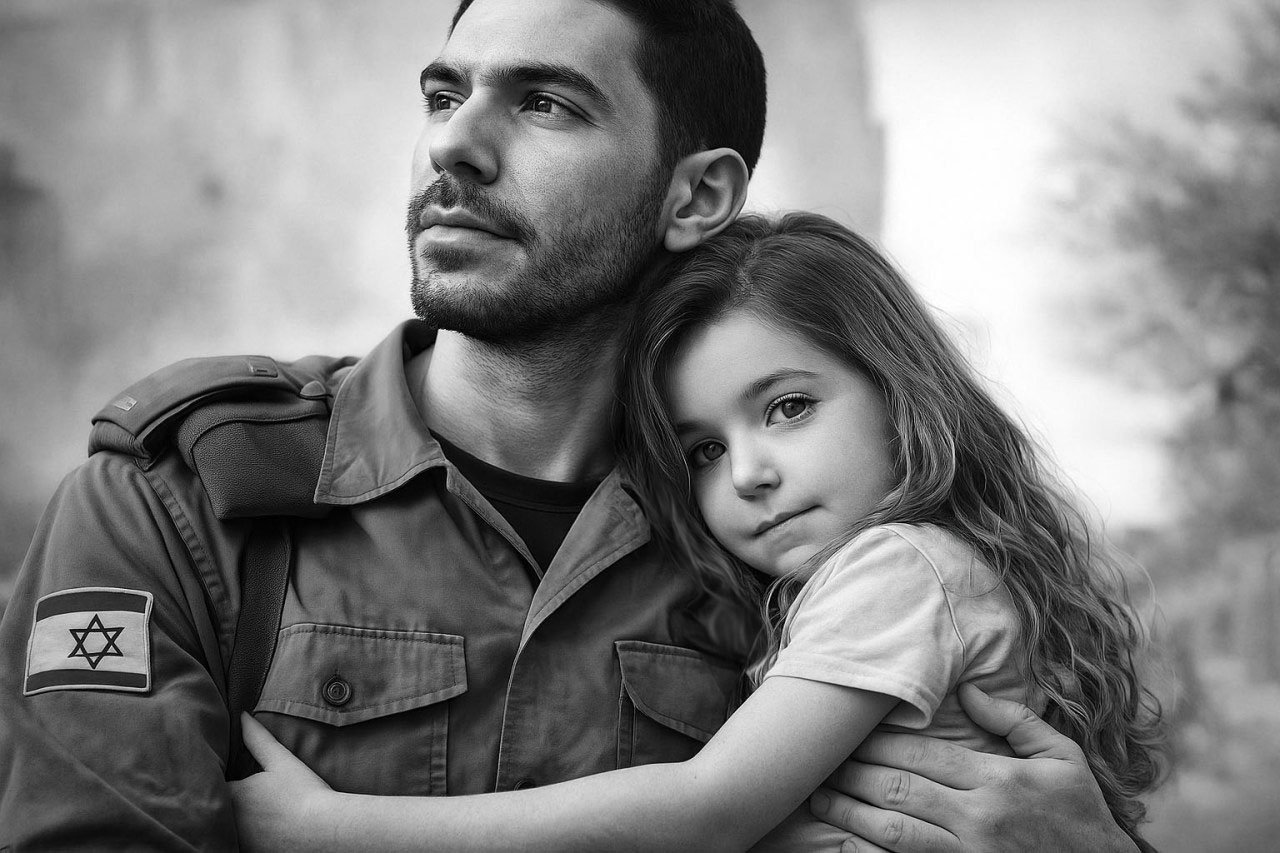
As a young girl, Victoria Cameron (then Victoria Cavendish) was trafficked while her father, Jason Cavendish, was stationed in the United Kingdom and reporting concerns about child exploitation connected to Westminster Abbey.
While the family attended Westminster Abbey in support of her Scottish-born mother’s Anglican faith, Victoria understood that her father — who served in the IDF under his Hebrew name — had also been tasked with observing and reporting concerns involving the possible exploitation and trafficking of minors.
According to the information later communicated within Victoria’s family, his reports described concerns about what he believed was not an isolated criminal operation, but an organized pipeline involving the movement and disappearance of vulnerable children through arrangements presented as “overseas adoptions.”
There had been growing concerns involving trafficking reports connected to minors, children that were labeled “illegitimate,” allegations her father was investigating concerning possible Hamas involvement, and allegations that children were being trafficked through networks operating around Westminster Abbey that served powerful British interests.
Her father’s reports described not an isolated criminal operation, but an organized pipeline involving the movement and disappearance of vulnerable children through trafficking disguised as “overseas adoptions,” spoken of as institutional protection networks designed to benefit elite British social and political environments.
The more Victoria’s father became aware of this evil, the more increasingly outspoken he became about antisemitism and Scottish independence. When he actively began to expose the trafficking network he had uncovered, the family experienced escalating retaliation.
It was within this climate of political pressure, institutional silence, and escalating retaliation that Victoria Cameron was trafficked.

Halloween night, London 1989
An eight-year-old child in 1989, Victoria was trafficked from London, U.K., on October 31—Halloween night, on the eve of her ninth birthday.
She had been attending a costume party at a mansion in Surrey when she was removed by multiple individuals connected to a trafficking network. They wore costumes from the musical The Phantom of the Opera used to partially conceal their identities during the abduction.
Victoria recalls that she did not leave through the front door. According to her testimony, she was led out through a hidden tunnel system by Jeffrey Epstein, Ghislaine Maxwell, and individuals she remembers as their associates, all wearing costumes connected to The Phantom of the Opera.
She recalls Epstein telling her that Andrew Mountbatten-Windsor had obtained the costumes for Ghislaine through his brother, Prince Edward, who at that time worked with The Really Useful Group.
This mansion was one of many old homes and buildings in the United Kingdom that have hidden tunnel systems embedded into their architecture. Its secret passageway enabled the group to bypass the crowds at the British mansion and exit through a secret underground tunnel.
* Image is a reconstruction of the scene as it looked in 1989 based on forensic memory notes provided by Victoria Cameron – The likenesses of individuals depicted were reconstructed from actual photographs of those involved.
the deception:
a ride home that wasn’t
Victoria’s uncle had left the event earlier due to a sudden illness and arranged for her to be assisted in finding a ride home.
Victoria recalls Ghislaine Maxwell telling the individual designated to drive her home that Jeffrey Epstein would take her home instead
Under this arrangement, Victoria left the party —and did not return.
* Image is a reconstruction of the scene as it looked in 1989 based on forensic memory notes provided by Victoria Cameron – The likenesses of individuals depicted were reconstructed from actual photographs of those involved.


The phantom:
What began as a simple ride home did not end there.
They drove to another location in Scotland and stopped.
There, Victoria was taken inside another Halloween party. When they left the party, they transferred into a different car — a limousine — where Victoria remembers another individual joined them before they continued on —Andrew Mountbatten-Windsor.
During the drive, Victoria recalls Mountbatten-Windsor spoke at length about having launched a ship earlier that day in Aberdeen, Scotland, the RMS St. Helena.
He was also wearing part of a costume from The Phantom of the Opera— the phantom’s mask. Victoria recalls he bragged that it had been autographed by Michael Crawford, the original phantom of the opera.
Victoria remembers the others in the vehicle referred to him as “the boss.” Victoria recalls he told her that he was the true monarch of The United Kingdom, not his mother, and called himself, “the shadow king.” She recalls he told her, “Everyone else in my family is just decor in the background.”
* Image is a reconstruction of the scene as it looked in 1989 based on forensic memory notes provided by Victoria Cameron – The likenesses of individuals depicted were reconstructed from actual photographs of those involved.
Transported across borders:
Kiev, Ukraine
She was then taken to an airport in London and forced to board a plane, where she was flown from the United Kingdom into the Soviet Union — to Kiev, Ukraine — just days before the Berlin Wall fell on November 9, 1989.
In a matter of hours, Victoria was transferred from an aristocratic party in Surrey, from an environment representing the pinnacle of British royal wealth and high society, to another party in the UK and then directly into a secure stronghold of the Red Army during the final days of the Cold War — the very military force the West had remained locked in a nuclear standoff with for over forty years.
The network controlling Victoria’s movements appeared to operate internationally and seemingly without borders — even during one of the most politically tense periods of the twentieth century. The speed and ease with which the group crossed international boundaries left a lasting impression on her.
The circumstances surrounding the flight suggested that the individuals involved operated with extraordinary levels of protection, diplomatic insulation, and international access far beyond what ordinary travelers would have possessed at the time.
The presence of a major global figure within the group appeared to create a level of freedom of movement that bypassed ordinary border scrutiny, customs procedures, and standard immigration controls, creating a “frictionless corridor” — a parallel transit system built exclusively for the ultra-elite.
When the flight landed in Ukraine, the Soviet Union was already experiencing deep political instability, food shortages, anti-communist unrest, and growing internal collapse. The atmosphere was heavily militarized, tense, volatile, and unpredictable.
Slipping in and out of a Soviet military airfield on a Western private jet during this specific period carried immense risk. It required nerves of steel from the adults orchestrating the operation.
Despite the tension surrounding the Soviet environment at the time, Victoria recalls that Andrew Mountbatten-Windsor appeared entirely at ease during the trip. To her, he showed no visible fear or hesitation.
Victoria remembers the group being received in a manner that conveyed unusual familiarity, confidence, and institutional comfort upon arrival.
As a child, she did not fully understand what was happening. She only understood that she had been abruptly removed from the familiar world she knew and transported into an environment that felt frighteningly foreign and completely beyond her control.
* Image is a reconstruction of the scene as it looked in 1989 based on forensic memory notes provided by Victoria Cameron – The likenesses of individuals depicted were reconstructed from actual photographs of those involved.

The military base
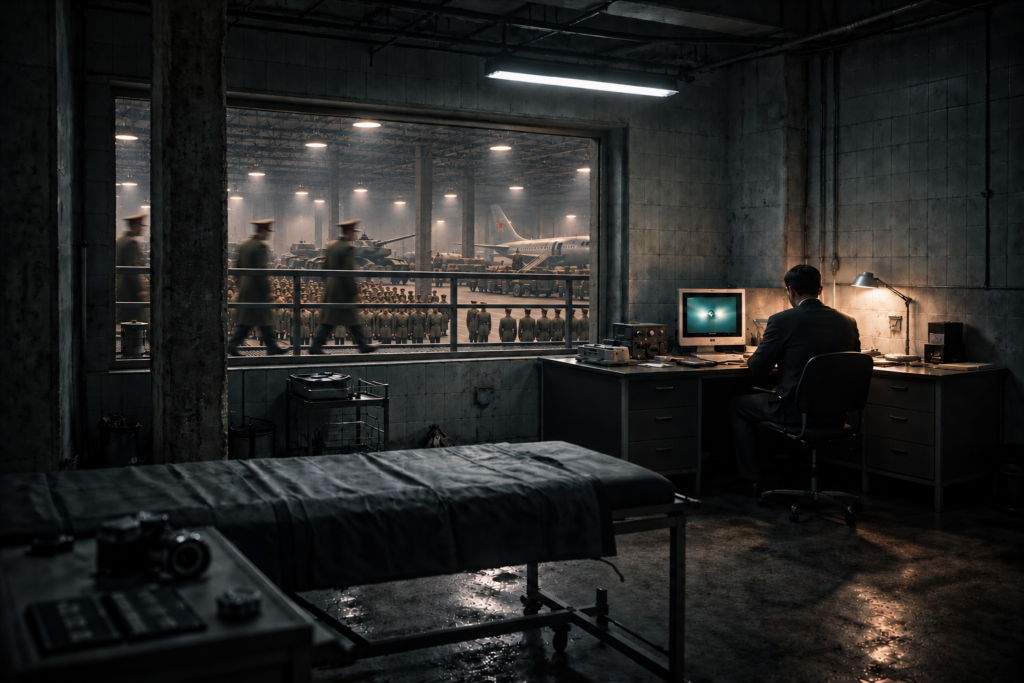
In Ukraine, the group stopped at a secured facility connected to a military base. There, Victoria was taken into a room resembling a doctor’s examination room.
Inside the facility, in a room positioned above the observation area with a view of the hangar floor, Victoria recalls being photographed in a state of undress. From what was said and done around her, she understood the photographs to be intended for a prospective buyer who had been discussed as having arranged to purchase her.
She recalls biometric data including fingerprints, and blood samples also being taken.
As a child, Victoria did not fully understand what was happening. The adults involved presented the process as though it were routine and official, leading her to believe that this was simply something that happened to certain “special” or chosen individuals, and that others had been taken through something similar at some point—and that it was now her turn.
Because a figure she associated with legitimate authority was present throughout the experience, she believed she had no choice but to comply.
Victoria recalls the atmosphere inside the facility feeling clinical, controlled, and impersonal — as though she was no longer being treated as a child, but like an object being inspected before purchase, the way someone might examine an item on a grocery store shelf before deciding whether to buy it.
The group communicated with an individual who had been prearranged to receive her — someone discussed as though he were a buyer in the process of purchasing her from them.
According to Victoria’s recollection of conversations among the adults, the prospective buyer objected to the terms and the transaction did not proceed as planned.
While at the military base in Kiev, the group also conducted business regarding another matter.
* Image is a reconstruction of the scene as it looked in 1989 based on forensic memory notes provided by Victoria Cameron – The likenesses of individuals depicted were reconstructed from actual photographs of those involved.
The New York house
She was then taken to Paris, where Victoria remembers the group remained briefly at a private residence before continuing on to New York without Andrew Mountbatten-Windsor who left on a different flight.
When the group landed in New York, they were waived on through the United States border checkpoint without a single bag being opened or a passport being stamped. The group appeared to bypass ordinary border procedures entirely, moving through a diplomatic channel that avoided normal customs and immigration scrutiny.
In New York, Victoria recalls being taken to a private residence where, based on conversations she heard among the adults, she came to understand that they intended to sell her as a child sex slave
.
She remembers the group spending several days making telephone calls, communicating with prospective buyers, and transmitting nude photographs of her by fax.
Victoria further recalls that, while they were awaiting a buyer, Jeffrey Epstein and Ghislaine Maxwell took her into a private room and subjected her to sexualized conduct involving sex toys on a massage table, which they described to her as an “orientation.
When she resisted them, Victoria recalls the situation escalated.
* Image is a reconstruction of the scene as it looked in 1989 based on forensic memory notes provided by Victoria Cameron – The likenesses of individuals depicted were reconstructed from actual photographs of those involved.

Calls for help in Central Park
At a critical moment, one of the individuals present in the house, intervened.
The individual suddenly appeared to fear she was the child of a government official—and after weighing the consequences they could face if discovered—he removed her from the immediate situation.
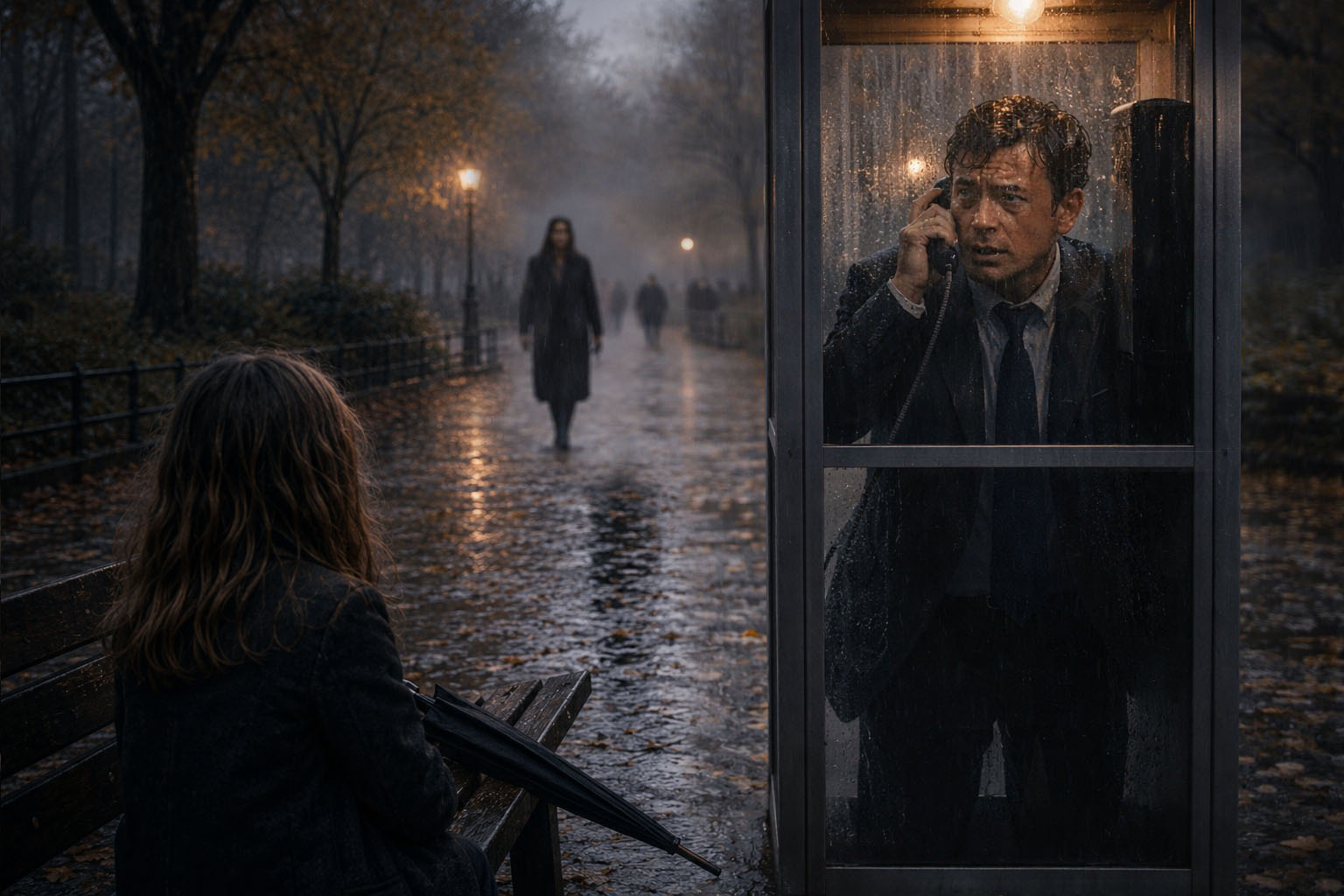
He then took her on a walk through Central Park in the rain, where he entered a telephone booth and made multiple calls, contacting various authorities in an effort to return her to her family.
He did so under the premise that Maxwell ran an adoption agency and that they had mistakenly taken the wrong child.
* Image is a reconstruction of the scene as it looked in 1989 based on forensic memory notes provided by Victoria Cameron – The likenesses of individuals depicted were reconstructed from actual photographs of those involved.
The salon in gladstone
Despite this intervention, the situation did not resolve as intended. Plans were quickly altered by others in the group. They had found a buyer.
Instead of being returned home, Victoria was transported from New York to a salon in Gladstone, Missouri—a suburb of Kansas City—under the pretense of a legitimate adoption transfer.
Before arriving in Kansas City, Victoria recalls Ghislaine Maxwell becoming angry with her and taking a pair of scissors to her hair. Rather than receiving a proper haircut, she hastily chopped it off to discipline her, cutting it unevenly, leaving it noticeably altered. By the time they arrived at the salon, her hair was short and in disarray.
The haircut had not been her choice. It was something done to her, without her consent and beyond her control. What remained was not simply a bad haircut, but a visible reminder that she had lost control over even the most personal aspects of her own appearance.
Her clothes were taken away from her and she was forced to dress as a boy, further contributing to the feeling that control over her appearance and sense of self had been taken away from her.
She was humiliated, degraded, powerless, stripped of dignity, violated, and exposed. The forced alteration of her appearance left her feeling as though her identity had been erased.
Madam Thenardier was seated in a salon chair having her hair professionally styled when they entered. Victoria was made to sit and wait while the appointment continued. No one offered to repair or even straighten the damage that had been done to her hair. The contrast left her feeling embarrassed, ignored, and devalued.
There, Victoria was handed over to Madam Thenardier, marking a decisive shift in control.
Victoria recalls Epstein referring to her as a “package” being delivered from the airport.
* Image is a reconstruction of the scene as it looked in 1989 based on forensic memory notes provided by Victoria Cameron – The likenesses of individuals depicted were reconstructed from actual photographs of those involved.

The Kansas city house
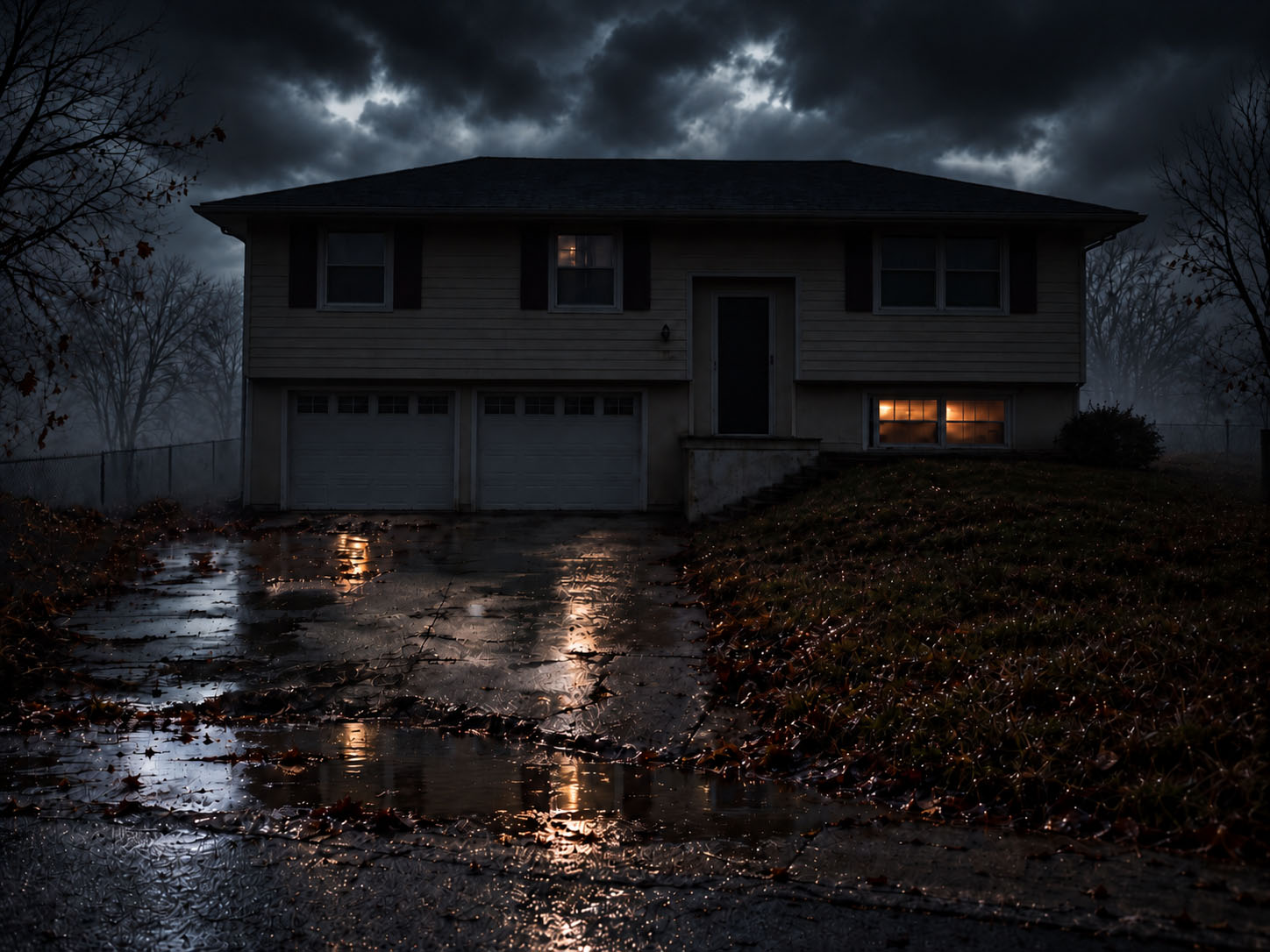
Following the handoff, Victoria was taken to a residence in Kansas City, Missouri in a neighborhood that bordered the suburb of Gladstone.
Victoria describes the house as operating publicly as a home babysitting service while functioning, from what she witnessed, as a holding point through which trafficked children were moved.
What appeared to neighbors as an ordinary home, was part of how the operation was concealed —It functioned in the community as a home babysitting service.
* Image is a reconstruction of the home exterior and yard as it looked in 1989-1990, based on photos of the actual house exterior
The ad in the newspaper
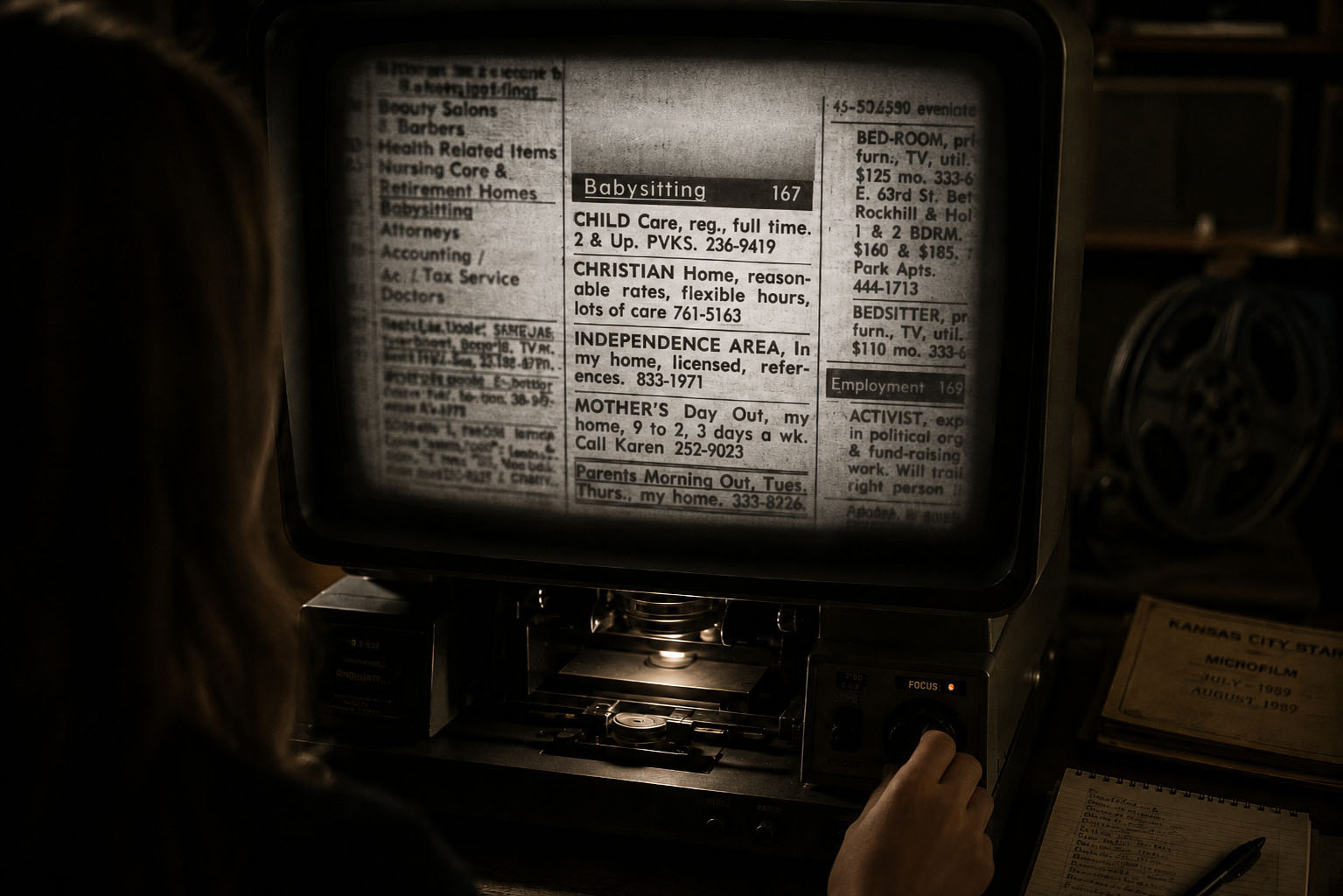
During the period she was held in Kansas City, Missouri, the woman she refers to as “Madam Thenardier” presented herself publicly as a home babysitter. She ran an ad in local newspapers advertising a “Christian home,” describing herself as a mother, and inviting families to trust her with their children.
Advertisements placed in The Kansas City Star classifieds during 1989–1990, reflect the type of listings Victoria remembers seeing placed for the home. She recalls watching as ads were called into the paper by telephone—part of what made the operation appear legitimate to those outside the home.
To neighbors, the steady presence of children coming and going could be explained.
It looked like a business.
But behind that appearance was a very different reality.
* Image contains exact advertisements from the classified section of the Kansas City Star from 1989-1990 that are thought to be some of the exact ads the Thenardiers’ placed.
Her room in the basement
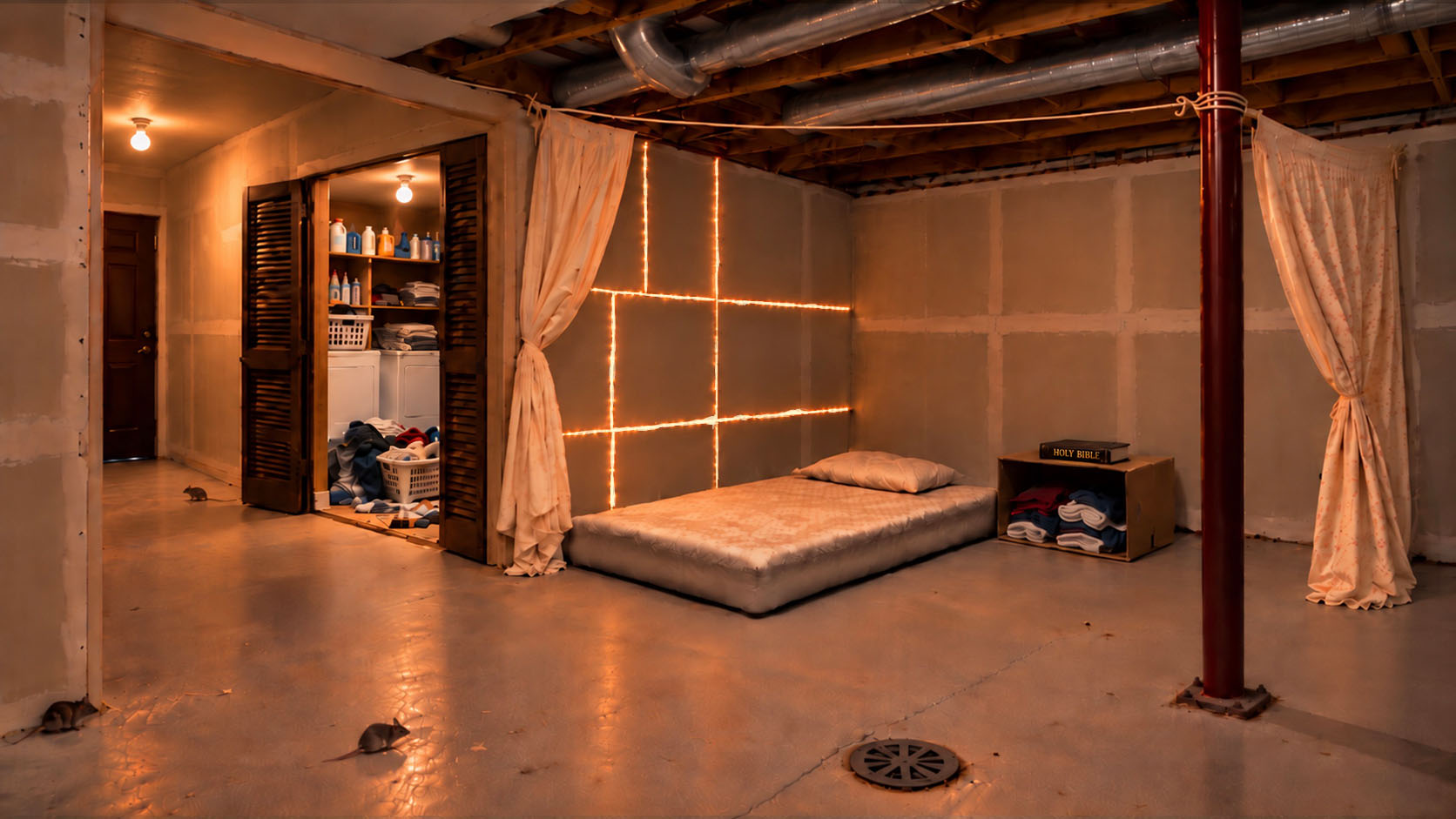
Inside the house, Victoria was forced into labor as a household indentured servant. She slept on a mattress on the concrete floor of the basement with the mice.
Mr. Thenardier supplied clothes he called “rags” for her to wear—acquired from Goodwill and a local thrift store. He told her, “These are the only clothes you are allowed to have.”
While she was kept in the basement, she was aware that the other children brought into the house did not remain there.
They were taken away—one by one—and did not return.
This was not hidden from her. Victoria recalls the buying and selling of children being discussed openly in her presence, even as a child, and she understood that the children were being sold.
She also understood that she was being kept for a different purpose.
She was told that the man she refers to as “Mr. Thenardier” needed her to take the place of a daughter who was no longer in the home. She was told this was necessary so that others would not question the daughter’s absence or what had happened to her.
Victoria understood, as a child, that her role in the house was connected to concealing what had been done.
While the other children were moved through the house, Victoria remained—held there, controlled, and conditioned to fit that role.
* Image is a reconstruction of the home interior as it looked in 1989-1990, based on photos of the actual house interior and forensic memory notes provided by Victoria Cameron
Why she was kept
Victoria was treated differently from the other children in the house.
She was not subjected to the sexual abuse that had occurred with a previous daughter in the household. This was explained as a deliberate decision intended to avoid drawing attention from authorities.
A magazine article—“The Child Abuser: How Can You Spot Him?”, first published in Redbook in August 1987—was brought into the home by Madam Thenardier and discussed with her husband. She had picked it up from a waiting room at a doctor’s office. Victoria recalls Madam Thenardier using the article to argue that visible evidence of child sexual abuse within a household could lead to suspicion from law enforcement, and that the absence of such evidence could help avoid detection.
Victoria recalls Madam Thenardier said to her husband, “I want a daughter. I really want a daughter. Let this be the one you never touch. It’s either that or jail.”
He agreed, and as a result, their plans for her changed. She was kept in the home under strict control and used as a human shield—maintaining the appearance of a normal family while helping to deflect scrutiny.
* Image is of the exact magazine that Madam Thenardier brought into the house. The magazine is the August 1987 issue of Redbook which featured the Article, “The Child Abuser: How Can You Spot Him?” by Gene G. Abel and Nora Harlow. A quote from the article reads, “He is not a stranger, but someone we know well… a man we trust…”

A world out of place
Mrs. Thenardier received telephone calls containing instructions about what was described as Victoria’s “transition” into the household. Victoria remembers some of those conversations being placed on speakerphone, allowing her to hear the caller. Victoria remembers the caller as Ghislaine Maxwell and remembers hearing her say that she was delivering instructions she had received from her boss.
This was intense psychological conditioning and identity manipulation: an effort to replace a nine-year-old child’s understanding of her family, her past, her country, her nationality, and most importantly—herself.
Mrs. Thenardier brought out family photographs showing her own daughter with the family. She pointed to the girl in the photographs and told nine-year-old Victoria that the girl was her. She talked through the photographs as though she were teaching Victoria what her own memories were supposed to be.
She also refused to call Victoria by her name and forced her to answer to her daughter’s name instead, repeatedly telling her, “I’m mom.”
There were home movies, too.
Mrs. Thenardier played family VHS tapes and told Victoria that the scenes she was watching were her memories—events from her own childhood and life with the Thenardier family.
Victoria knew they weren’t.
The 1939 MGM musical The Wizard of Oz, starring Judy Garland as Dorothy Gale, became part of the same effort.
Mrs. Thenardier repeatedly played the film and told Victoria that she was Dorothy. But the comparison was more specific.
Mrs. Thenardier told Victoria that Kansas City was her real home and that she was her daughter. The life Victoria remembered in Britain—and the family she remembered there—was explained through Dorothy’s journey to Oz.
Dorothy begins in Kansas. She travels to another world, experiences it as real, and eventually awakens back home in Kansas. Oz had been a dream.
Mrs. Thenardier told Victoria that her memories worked the same way.
The family and life she remembered in Britain belonged to the “Oz” part of the story. Kansas City was home. Mrs. Thenardier was her mother. The other life had been a dream.
To reinforce this concept, Mrs. Thenardier made Victoria wear a blue-and-white checked Dorothy-style dress. She took a pair of children’s shoes, covered them with red glitter and turned them into homemade “ruby slippers.”
Yet while Victoria was being told that the British life she remembered was a dream, images from Britain repeatedly appeared on the television.
Victoria remembers long VHS recordings containing television news coverage of the British Royal Family being played every day, all day long, all throughout the day. When one tape ended, Mrs. Thenardier would get up and put in another. Coverage of the Challenger space-shuttle disaster was also among the television news material Victoria remembers from the tapes.
For a nine-year-old already trying to understand where she had been taken, it made an already confusing environment even more confusing.
On one occasion, Victoria remembers watching the British news coverage and trying to determine where she was from what she saw on television.
She concluded that she must be somewhere in Wales.
She was in Kansas City.
Images of Princess Diana appeared throughout the household.
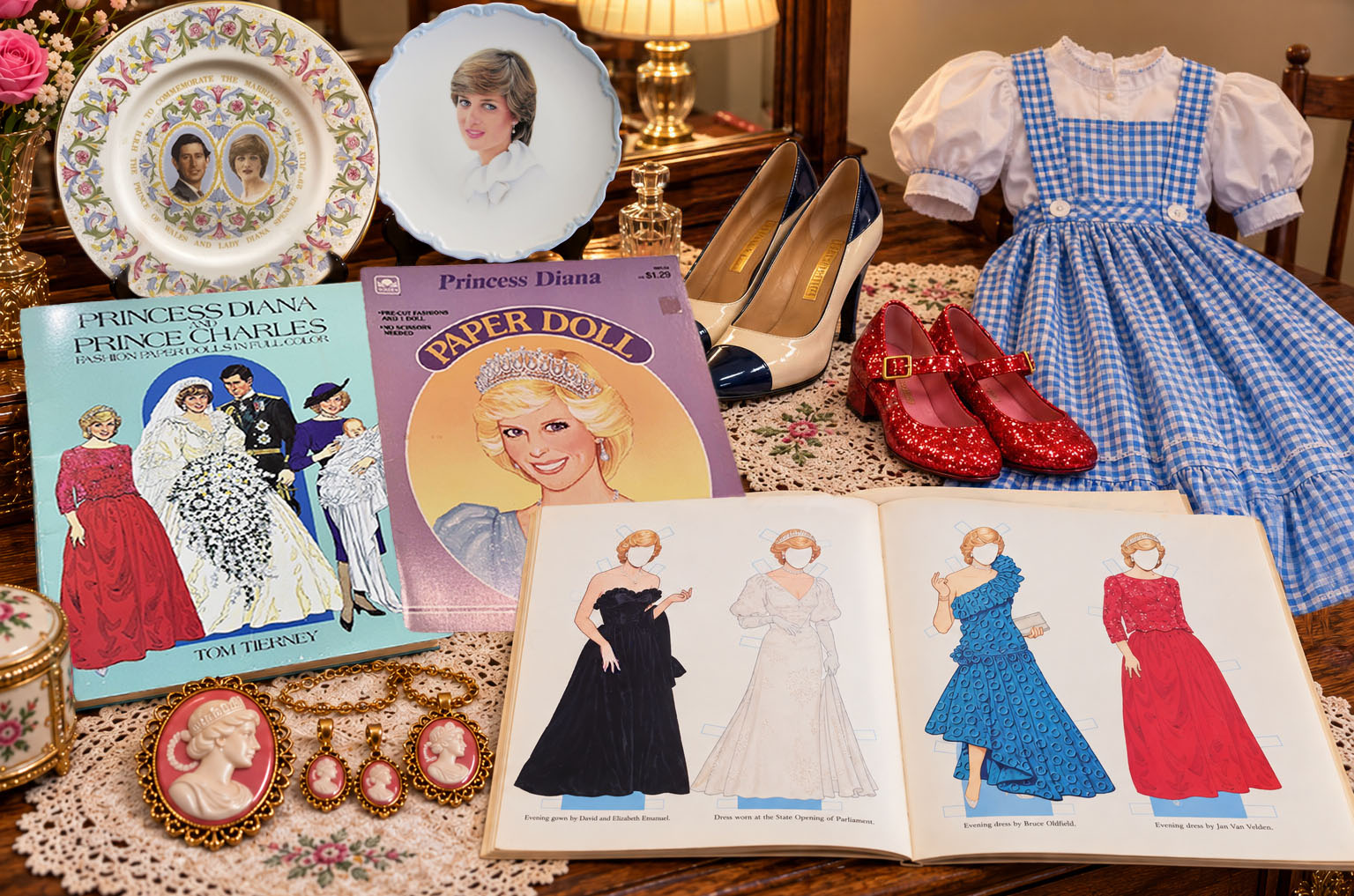
Victoria remembers two particular Princess Diana paper-doll books, both published in 1985: Golden’s Princess Diana Paper Doll and Tom Tierney’s Princess Diana and Prince Charles: Fashion Paper Dolls in Full Color.
The second book produced an especially vivid memory.
It contained paper dolls of both Diana and Charles. Victoria remembers Mrs. Thenardier removing the Prince Charles paper doll and telling her that she was “not allowed to see a man in his underwear—especially that man.”
There were other Diana objects in the house, including Princess Diana commemorative plates. Mrs. Thenardier also owned navy-and-white two-tone high-heeled shoes that Victoria remembers her saying she had to have because Princess Diana had them.
And there was another Diana.
Mrs. Thenardier owned cameo jewelry—a necklace, earrings and a brooch—with a raised white classical profile against a muted pink or reddish background. Victoria remembers the figure depicted in the cameos as Diana, the Roman goddess of the hunt.
Victoria remembers that the Princess Diana material was not part of the household’s existing possessions. The plates, paper-doll materials and other Diana-related items used during her “transition” had been shipped to the house as part of the materials provided for that process, carefully selected and supplied by the people who arranged her placement with the Thenardiers.
They arrived with a note containing detailed instructions as to how they were to be used. Mrs. Thenardier was instructed to use this material during Victoria’s transition into the identity the household was attempting to impose upon her.
* Image is a reconstruction of a compilation of items of interest from The Thenardier’s house.

The paddle
Though she was not sold in the local brothels as others under The Thenardiers’ control were, she was not spared from abuse.
She was beaten with an old wooden schoolteacher’s paddle—punished, controlled, and treated as property. The violence was deliberate, used to enforce obedience and maintain the role she had been assigned within the household.
It was also used to force her to speak like an American. Her British accent was beaten out of her so she could blend in as their “adopted” daughter to neighbors and outsiders.
The beatings reinforced a clear message: she was not free, and she did not have a choice.
* Image is a reconstruction of the home interior as it looked in 1989-1990, based on photos of the actual house interior and forensic memory notes provided by Victoria Cameron – The likenesses of individuals depicted were reconstructed from actual photographs of those involved.
The kitchen
When Victoria arrived at the house, Mr. Thenardier made sure she understood two things: that he was dangerous, and that she wasn’t going anywhere because she belonged to him now.
He had bought her.
She was no longer free.
In the kitchen, Victoria was made to clean, mop, and carry out daily chores—dressed like a boy. She was also forced to serve Mr. Thenardier dinner like a waitress.
At the dining table, he would sit with large takeout meals—including his favorite—buckets of Kentucky Fried Chicken, with sides of mashed potatoes, gravy, beans, coleslaw, biscuits, and large soft drinks. The leftover food was for the others in the house, including the trafficked children.
There, he talked casually about the crimes he had committed. He spoke about it the way other men might talk about their day at work.
To anyone outside the home, it could have looked like an ordinary evening.
Inside, it was something else entirely.
* Image is a reconstruction of the home interior as it looked in 1989-1990, based on photos of the actual house interior and forensic memory notes provided by Victoria Cameron – The likenesses of individuals depicted were reconstructed from actual photographs of those involved.
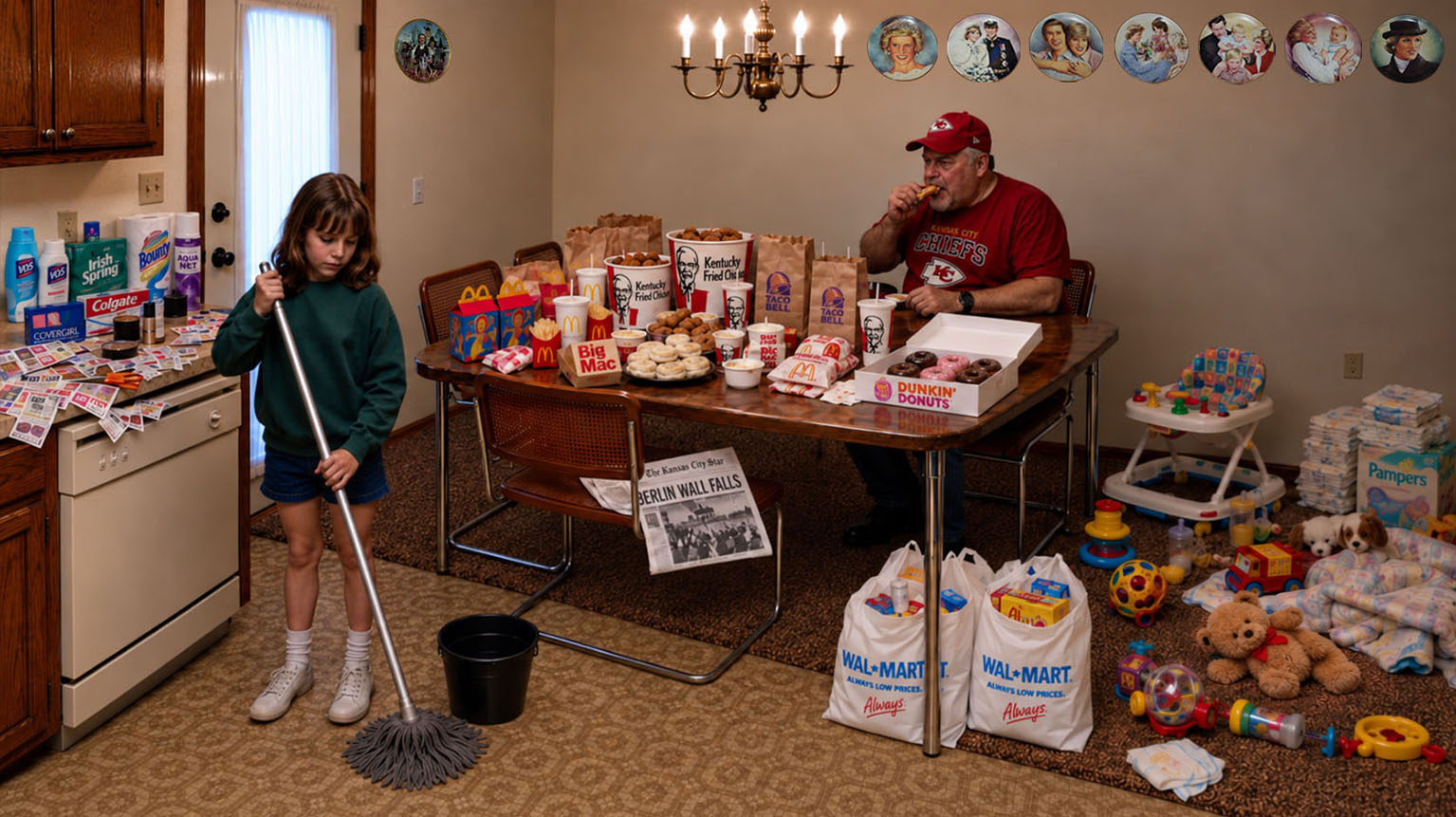
The associations – what was said in the house
Mr. Thenardier spent a great deal of time watching television. He watched, sports, political talk shows and the news, but also wildlife programs showing predators stalking, attacking and killing prey. These scenes of animals hunting other animals and ripping their prey into shreds played in the house again and again.
When he aggressively shouted at her for “being bad,” Victoria often felt like she was his prey—like the animals she had watched being hunted and torn apart on the television.
Mr. Thenardier was an avid sports fan and spent a large amount of time watching his favorite sports teams on television, especially The Kansas City Royals and The Kansas City Chiefs.
Victoria remembers that when the children were in the living room, he would sometimes get up and stand only inches from the screen, planting himself directly in front of it in an umpire-like stance and deliberately blocking their view.
It was part of a larger pattern Victoria remembers in his behavior toward the children. He deliberately ignored them and made it clear that they were being shut out. If they tried to approach him or ask him for something, he could become angry, aggressive and volatile and would sometimes even growl at them like a bear to scare them away from him.
But when the team he was rooting for did something he wanted, his demeanor would suddenly change. He would shout:
“OH YEAH, BABY, THAT’S THE TICKET!”
When Mr. Thenardier wasn’t watching television, he was reading the newspaper. He frequently spoke about violent criminals, trafficking networks, political organizations, and people he claimed to know or be connected to, often in ways that felt designed to intimidate and psychologically control the children inside the house.
Among the names he repeatedly referenced was Robert Berdella, the serial killer widely known in the media at the time as “The Kansas City Butcher.” Mr. Thenardier referred to him casually as “Bob” and claimed that Berdella had “taught him everything he knows,” including how to dispose of bodies without being caught.
At the time, Victoria did not fully understand who Berdella was, though Mr. Thenardier appeared to believe she did because of the intense media coverage surrounding the murders in Kansas City.
Mr. Thenardier also claimed to be connected to the PLO, the Palestinian Liberation Organization, which he described to Victoria as powerful, calling it, “the best organization in the world.” Knowing her father had served in the Israel Defense Forces, he repeatedly told her that it was no coincidence she had been trafficked to “enemies of Israel.”
He referred to Victoria as a hostage and a “political prisoner” — terms she did not fully understand as a child, but which intensified the fear and psychological confusion surrounding her captivity.
To Victoria, these statements felt less like ordinary conversation and more like deliberate psychological intimidation and torture intended to make her believe she had been placed inside a world controlled by dangerous and untouchable people.
* Image is a reconstruction of the home interior as it looked in 1989-1990, based on photos of the actual house interior and forensic memory notes provided by Victoria Cameron – The likenesses of individuals depicted were reconstructed from actual photographs of those involved.

The grandma
Victoria was taken to meet a woman she was told was her grandmother.
Inside the front door of her home, Mr. Thenardier pointed to a painting of Jesus on the wall and told her, “This is who to talk to if you want to get away from us.” Then he told her that Jesus could not hear her—that He was deaf—and that if Jesus truly cared about her, He would not have allowed her to be sent there.
The message was clear: there was no one who could help her—not even Jesus.
He then led her downstairs to the basement and showed her a series of dog cages he referred to as “the kennel.” He told her, “This is jail. This is where you go if you are bad.”
When they returned upstairs, she was introduced to an elderly woman named Esther whom she had been told was her grandmother.
To Victoria, the name itself felt unsettling—a biblical name associated with courage and deliverance attached to a woman she encountered in the middle of terror and psychological manipulation.
* Image is the exact painting of Jesus that was in the house

The witchcraft
The spiritual environment inside the house was deeply disturbing to Victoria as a child.
Madam Thenardier openly discussed witchcraft, spell casting, curses, love potions and rituals in ordinary conversation, as though these things were completely normal. Victoria recalls seeing spell books, voodoo dolls, handwritten rituals, and objects associated with occult practices throughout the home.
At times, conversations in the house turned toward disturbing subjects involving death, spiritual power, and rituals intended to bring protection, wealth, or control. Victoria remembers hearing statements about bodies being buried in the yard and around the foundation of the house, talked about as part of spells and rituals intended to bring wealth.
From the basement where she was kept, Victoria recalls witnessing acts of violence that she understood at the time to be connected with occult practices, including what appeared to her to involve coat-hanger abortions and what she believed to have been ritualized violence against infants, including baby sacrifices.
From where she was kept in the basement, she could sometimes see into a nearby room where these activities took place. These horrifying activities added to the darker spiritual atmosphere surrounding the home.
To Victoria, the environment felt spiritually chaotic and frightening — a place where manipulation, fear, violence, and occult beliefs existed side by side.
What disturbed her most was the contradiction between the private environment inside the house and the public image Madam Thenardier presented to the outside world. Publicly, she portrayed herself as a Christian woman who attended church, sang in the choir, and taught Sunday school —while privately engaging in behavior that stood in direct contrast to that image.
For Victoria, being forced to witness these things stood in direct opposition to the Christian and Jewish faith she had been raised in, intensifying the sense of fear, confusion, and violation she experienced while living in the house.
* Image is a reconstruction of the home interior as it looked in 1989-1990, based on forensic memory notes provided by Victoria Cameron
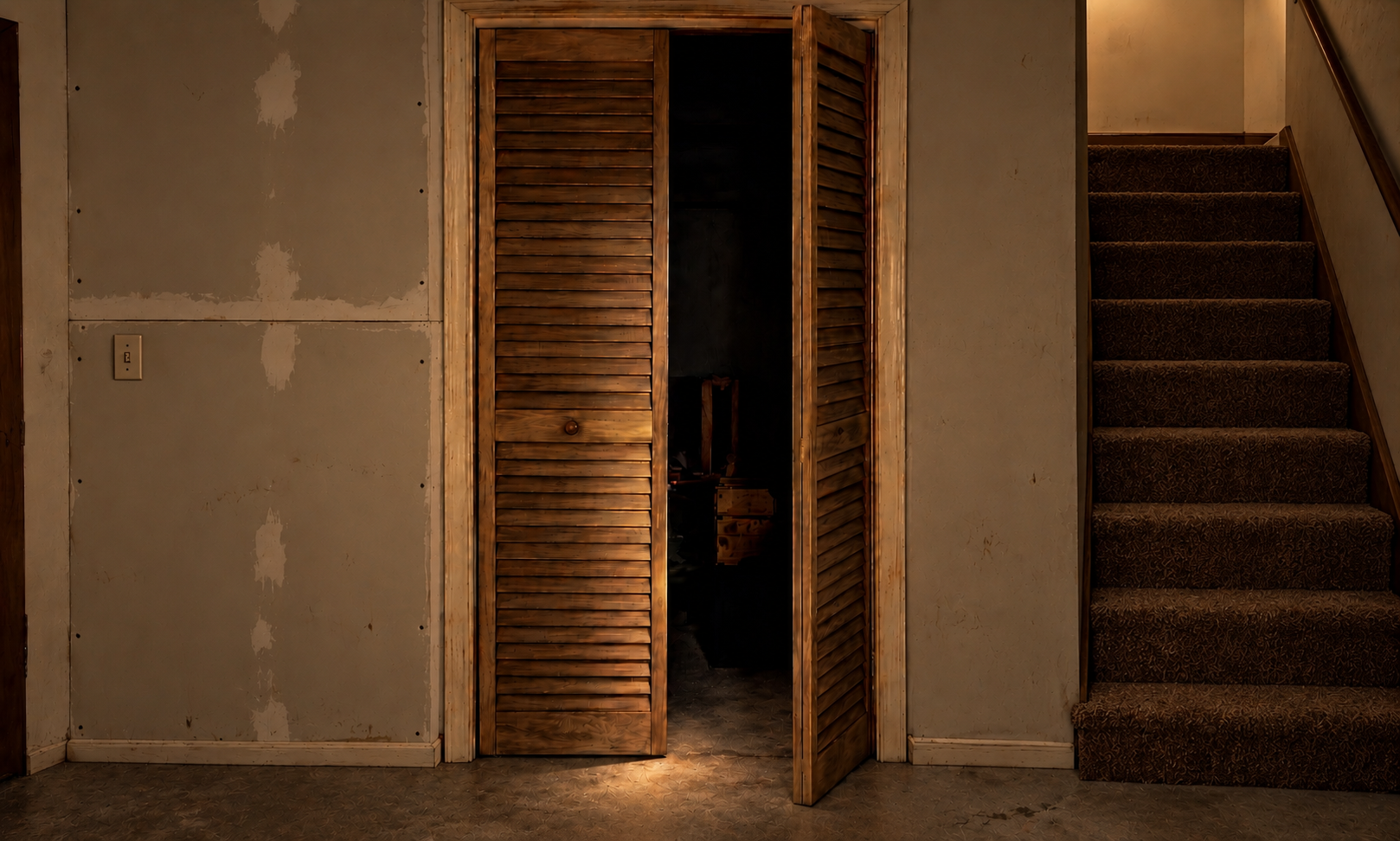
The operations
The Thenardiers’ activities appeared to function as part of a larger local operation involving prostitution, trafficking, and drugs.
Victoria recalls witnessing Madam Thenardier manage girls who were moved through the household and into prostitution. They were transferred to other locations — homes, apartments, and motels — connected to Mr. Thenardier and the people he worked with.
The girls were frequently spoken about as though they were property or inventory rather than people. They were compared to animals in a “kennel,” called “cats” and “dogs,” and sometimes described as cars, with the operation itself referred to as “the car business.”
Victoria also recalls hearing members of the organization refer to their operation as “the unicorn.” The name stood out to her because the unicorn is the national animal of Scotland, and there were other children from the United Kingdom present within the network. However, the meaning behind the name was never fully explained to her.
Victoria remembers occasions in which police officers appeared at the house in response to disturbances or incidents connected to the property. Victoria recalls seeing checks or money handed over by the Thenardiers during some of these encounters, after which officers left without further intervention.
Mr. Thenardier openly bragged that he had members of the Kansas City police “on his payroll,” claiming that money earned through trafficking and prostitution allowed him to pay people off so they would not interfere with his operation.
To Victoria as a child, these incidents reinforced the frightening belief that the adults controlling the house operated with a sense of protection, influence, and impunity.
* Image was created from forensic memory notes provided by Victoria Cameron

The saw
The incident that led to intervention began in the living room.
Other children in the house asked Victoria to show them ballet moves after she told them she was a dancer. When Madam Thenardier saw this, she became enraged. She shouted that her daughter was not a dancer—reacting to the role she was trying to maintain.
She grabbed Victoria by the wrists and dragged her down the hallway into a back bedroom, threw her onto the bed, and said she would make sure she would never dance again.
She then retrieved a chainsaw she had been using earlier that day and threatened to cut off her legs. At first, Victoria did not believe she would follow through. That changed when the saw was brought into the room and repeatedly turned on and off.
Unbeknownst to her, one of the other children in the house was unplugging the saw in an attempt to stop it. As the interruptions continued, Madam Thenardier became more agitated, believing “spirits” or “poltergeists” were interfering.
Eventually, in her anger, she brought the saw down onto Victoria’s leg while it was off, causing a serious injury.
At that moment, there was loud knocking at the front door. The father of the child who had been intervening had been called and had come to the house. When Madam Thenardier answered the door, he saw blood on her hands and heard Victoria screaming from inside.
He forced his way past her, went to the bedroom, and found Victoria on the bed, her leg covered in blood. He carried her out of the house and drove her directly to the hospital.
The injury was severe and carried the risk of permanent damage. It was a life-threatening situation that required immediate medical intervention.
This incident broke the control that had been maintained inside the home. It exposed what had been happening and led to her removal from the house.
*Image was created from forensic memory notes provided by Victoria Cameron

the fight
After the injury, Victoria was temporarily removed from the Thenardiers’ home and cared for by the family who had intervened, in a Messianic Jewish household. The father who rescued her went on a fast and prayed that her leg would not need to be amputated. It did not. His prayers were answered.
During this time, she was in a short-term foster care arrangement in his home.
However, a legal decision resulted in her being unexpectedly returned to the Thenardiers’ house. The explanation given to the court was that the injury had been accidental.
The return was unexpected and traumatic. After being removed from their environment, she was sent back into it—ordered by law.
During this time, the family who had taken her in continued to raise concerns and were in the process of contacting her biological family in an effort to overturn the situation and secure her release, and send her home.
* Image is a reconstruction created by forensic memory notes provided by Victoria Cameron – The likenesses of individuals depicted were reconstructed from actual photographs of those involved.

The Rescue on Rosh hashanah
In the days leading up to her removal, the Thenardiers were agitated and on edge. They became very angry with Victoria and punished her by confining her outside on a small section of the back deck for over three days. She was not allowed back inside for any reason.
She was left there continuously—day and night—with no access to basic care. A bucket was placed on the deck that she was forced to use as a toilet. Food and water were brought to her like a dog.
By the morning of September 19, 1990—Rosh Hashanah—Victoria believed she might not survive.
That morning, a car arrived at the house. It was the father who had previously intervened, along with his sons and a man connected to Victoria’s family—Joseph Cameron.
At first, she thought she might be imagining it—that they were a mirage. When they approached the house, she called out to them and told them she had been left outside for days.
As the men prepared to go to the front door, Victoria screamed, warning them not to enter the house, believing they were in danger.
Instead, they contacted Child Protective Services.
CPS personnel arrived and attempted to gain access. At first, they were told that nothing was wrong. When they insisted on seeing Victoria, they were met with resistance.
When they reached her, it was immediately clear that she had been left outside for days without proper shelter or care.
Victoria was removed from the home that day and left with Joseph Cameron, the man connected to her family, who arrived to take her back to the UK.
She was finally out of the Thenardiers’ control, and she went home.
The immediate danger ended — but the network that trafficked her remained intact amid jurisdictional gaps, powerful connections, and what Victoria and her family experienced as repeated institutional failures to confront what had happened.
It did not end there. They came after her again…
* Image is a reconstruction of the home interior as it looked in 1989-1990, based on photos of the actual house interior and forensic memory notes provided by Victoria Cameron – The likenesses of individuals depicted were reconstructed from actual photographs of those involved.

No one wanted to believe it
In the aftermath of the 1989 trafficking incident, Victoria’s allegations were often met with confusion, disbelief, or attempts to find alternative explanations. Because some of the individuals she identified were socially prominent and included a member of the royal family, investigators initially questioned whether impersonators or unrelated individuals resembling those she described may have been involved.
To Victoria and her family, it often felt as though investigators did not want to believe the testimony of a nine-year-old girl.
This atmosphere made it difficult for her account to be fully understood at the time. While some remained skeptical, her relatives continued pursuing answers and advocating on her behalf through further investigation and legal channels completely outside of the eyes of the media.
Although Victoria had physically returned home, the aftermath of the trafficking incident continued to shape daily life through ongoing investigation, secrecy, and attempts by adults around her to piece together what had happened. The trauma itself — along with counseling, healing efforts, and the emotional exhaustion that followed — made it impossible for life to simply return to normal. To Victoria, it often felt as though the crime itself had never truly ended, because the consequences of what had been done to her had now taken over nearly every part of her life.
* Image is a reconstruction of a scene based on forensic memory notes provided by Victoria Cameron

Editorial Notes
- Image Reconstructions: The images presented on this page are visual reconstructions based on the firsthand memory and experiences of Victoria Cameron. Certain scenes have been recreated using reference materials, including photographs of real locations, to reflect how these environments appeared at the time. These images are intended to provide visual context to the narrative and support the documentation of events described. These reconstructions are part of an ongoing forensic effort to document and preserve the details of events described in this account.
- Are there additional events beyond 1989? The 1989 account is a summarized version of the first timeline of events in a broader story spanning multiple years. Additional events, including later abductions and re-trafficking attempts, will be presented in future sections of the project. Available now is Victoria’s testimony of rescue from the 1996 re-trafficking incident: The Faith of a Hero
- Why is this story abbreviated on this website? This page provides a concise overview for readers, press, and potential partners. Additional details are being reserved for the memoir, supporting documentation, and future releases.



Do You Hear the People Sing?
It’s Time For a National Reckoning
One survivor’s fight for freedom becomes a country’s call for justice.