
How the Lens of Les Miserables formed
After Victoria was recovered from the 1989 child trafficking incident, her family focused intensely on helping her heal.
They approached what had happened to her not simply as an abduction, but as something spiritually and psychologically devastating. Her entire environment became centered around restoration and rebuilding her sense of self.
Her life became filled with art, music, ballet, gardening, cooking, interior design, faith, therapy, and family support. Her father’s work responsibilities were altered so he could remain home more often, allowing him to spend more time helping care for her during the recovery process.
One of the people who remained close to the family during this time was Joseph Cameron— a longtime family friend from Westminster Abbey who had known Victoria since infancy. Joseph had also been one of the individuals who appeared at the Kansas City house in 1990 when Victoria was recovered, after being connected to the investigation through family contacts working desperately to find her.
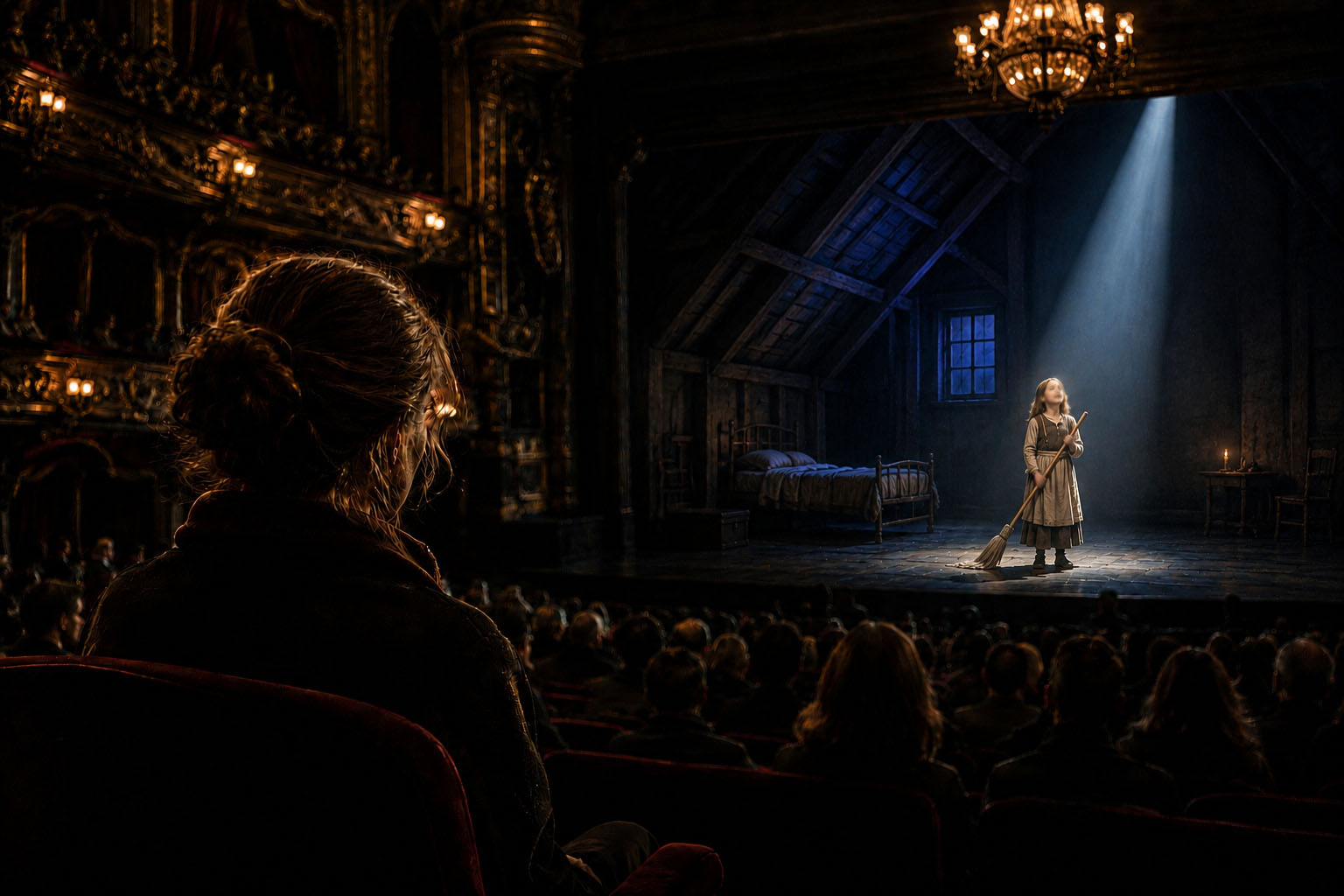
As part of Victoria’s healing process, Joseph took her to see Les Misérables in London’s West End. His intention was simple: he wanted to see whether she might have an interest in musical theatre.
He was unprepared for what happened next.
During the scenes involving Cosette at the Thenardiers’ inn, Victoria began reacting intensely to the production. She couldn’t stop crying.
The image of Cosette being treated as a servant, forced to clean with a broom while being shouted at and demeaned by the Thenardiers, mirrored what Victoria had experienced as a trafficked child in Kansas City.
For Victoria, the comparison was immediate and overwhelming. Victoria was recognizing her own life on stage.
The Thenardiers’ world of exploitation, criminality, humiliation, violence, and the abuse of vulnerable children was horrifyingly familiar.
What began that night in London eventually became the interpretive lens through which Victoria understood much of what had happened to her life. Victoria began to recognize people, relationships, and events in her own life reflected through the moral and emotional framework of Les Misérables. The story became not simply a musical she related to, but a lens she used as a tool to help her family understand what had happened to her.
“I saw everything that happened to me through that lens. I felt like I was trapped in the story, but it was about Scotland instead of France,” said Victoria



Do You Hear the People Sing?
It’s Time For a National Reckoning
One survivor’s fight for freedom becomes a country’s call for justice.