The Theatrical Disguise Used To Terrorize A Child.
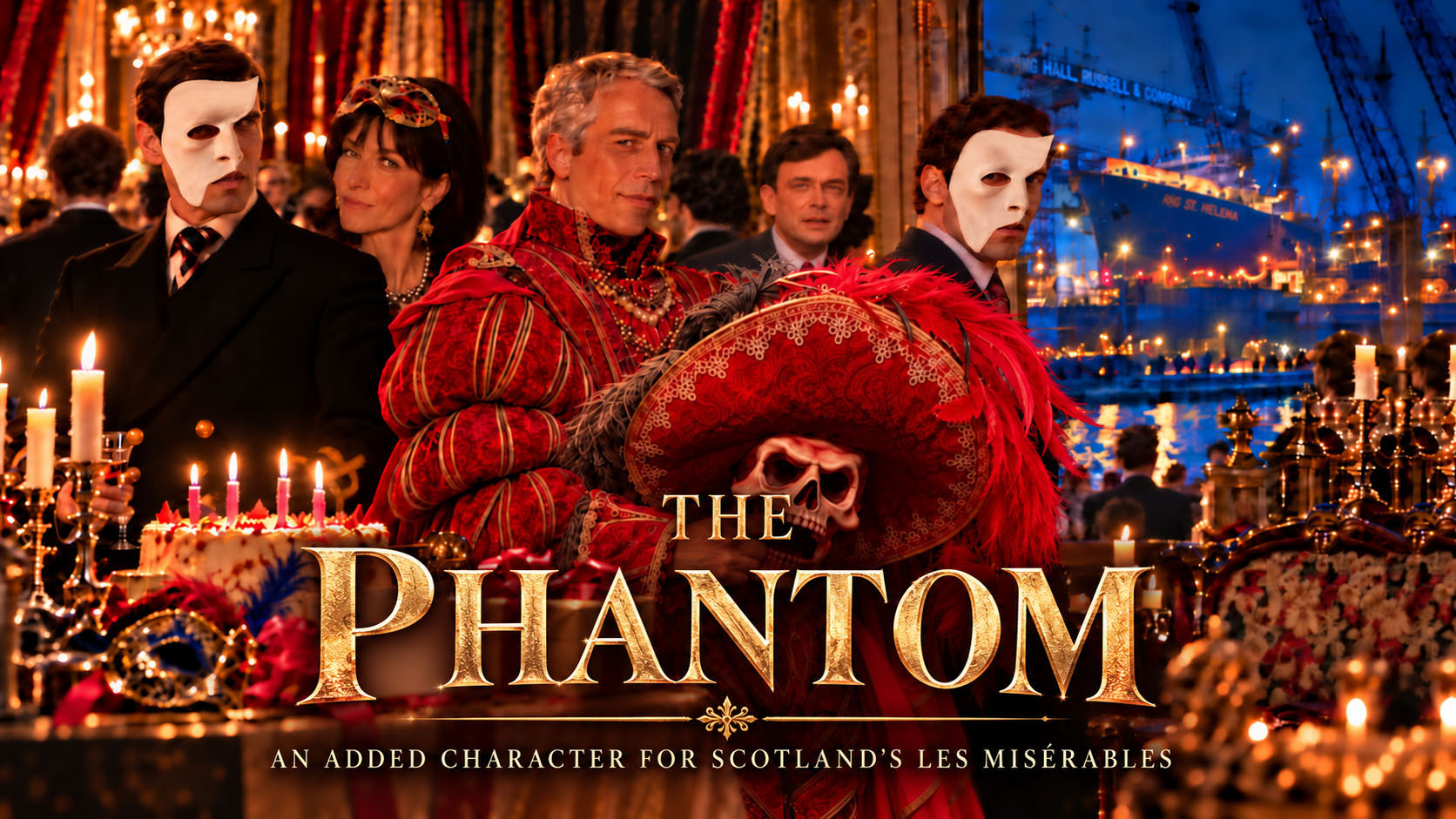
Victoria was first abducted on October 31, 1989, the evening Andrew Mountbatten-Windsor launched a ship in Aberdeen, Scotland, the RMS St. Helena, at the Hall, Russell & Company shipyard.
The kidnapping occurred at a costume party on October 31, 1989, on the eve of Victoria’s ninth birthday.
According to Victoria’s report, Andrew Mountbatten-Windsor and the group involved, including Jeffrey Epstein, Ghislaine Maxwell, and their associates, wore costumes from the iconic Broadway musical “The Phantom of the Opera”— one of the most haunting elements of her abduction.
“The Phantom of the Opera” officially opened in London’s West End on October, 9, 1986, at Her Majesty’s Theatre. The acclaimed musical, featuring music by Andrew Lloyd Webber, had its first preview on September 27, 1986. The original cast featured Michael Crawford as the Phantom and Sarah Brightman as Christine .
In 1989, “The Phantom of the Opera” was one of the most culturally iconic musicals in London’s West End.
Andrew Mountbatten-Windsor’s brother, Prince Edward, worked for Andrew Lloyd Webber’s company The Really Useful Group as a production assistant and appeared to be the most likely source as to how the costumes were supplied.
According to investigators, Andrew Mountbatten-Windsor called himself “The Invisible Man,” which was looked at by some as a way he may have chosen to personify himself with the characterization of The Phantom.
When the child trafficking abduction of Victoria repeated in 1996, the same people were involved, and Andrew Mountbatten-Windsor again wore the phantom mask.
When this was originally investigated, Andrew Mountbatten-Windsor’s involvement was trivialized and minimized. Local police assumed actors or impersonators were at fault —not him.
Victoria knew it was him.
In Scotland’s Les Misérables, the phantom rhetorically brings uncomfortable things to the surface: the calculated theatricality used to terrify and disorient a child; the fusion of power, spectacle, and secrecy within the trafficking network; and the mask of aristocratic respectability covering violence, exploitation, and the involvement of powerful individuals.
In Scotland’s Les Misérables, The Phantom represents the moment theatrical spectacle stopped being entertainment and became part of the terror.
As a tune from The Phantom of the Opera itself reminds its audience,