Beauty, Power, and the Price of Access: Where Social Elevation Became a Transaction.
In Les Misérables, the Lovely Ladies represent women shaped by poverty, exploitation, survival, sexuality, and systems that gradually consume human beings while disguising the cost beneath beauty, performance, and social expectation.
In Scotland’s Les Misérables, The Lovely Ladies represent the elite escort culture surrounding aristocratic, political, celebrity, and financial circles — a world in which beauty, sexuality, luxury, travel, social access, and proximity to powerful men became part of an organized economy of human relationships.
Victoria remembers powerful individuals who were facilitators and consumers of this world calling it “The Royal Escort Program.”
The account that follows is based on what Victoria says she personally observed, heard discussed, and was told while inside Epstein’s environment.
The operation did not appear to Victoria to be simply the private sexual world of one wealthy financier. It existed within a larger culture in which women could be introduced, trained, transformed, and moved through increasingly powerful social circles.
The women Victoria personally encountered in Paris in 1996 when she was a hostage to Epstein did not arrive believing they had accidentally entered an escort operation.
Many deliberately sought out to work for Epstein and his associate Jean-Luc Brunel.
Within that world, working around Epstein and Brunel appeared to be regarded as access to an unusually prestigious tier of the escort industry. Women who wanted entry into elite circles saw opportunities to associate with wealthy businessmen, aristocrats, politicians, celebrities, and other powerful men whom they would ordinarily never have met.
Epstein openly presented this as social advancement.
Victoria explains he described taking women who came from ordinary backgrounds and moving them into his own social demographic — giving them access to a completely different kind of life from the one they might otherwise have lived.
Epstein also described the system as one in which women could gradually become emotionally, socially, and financially attached to increasingly powerful men. Some, he explained, might eventually move beyond escort arrangements altogether and into exclusive long-term roles as wives, girlfriends, mistresses, concubines, or financially supported companions within elite social circles.
In his presentation, this was not a failure of the system but one of its possible outcomes: a woman who entered as an escort could ultimately be absorbed into the life of a powerful man and permanently relocated into a different social world.
The promise was not simply money. It was transformation.
Women could travel internationally, stay in luxury hotels and resorts, attend exclusive events, receive expensive clothing and designer products, and experience environments ordinarily reserved for the extremely wealthy and socially connected.
Physical transformation could become part of that process as well.
Epstein asked women what they disliked about themselves and could offer cosmetic surgery, liposuction, breast implants, beauty treatments, cosmetics, clothing, and other expensive services intended to transform their appearance.
But the generosity was transactional.
Once large amounts of money had been invested in a woman’s appearance, lifestyle, travel, or social positioning, the investment created expectation.
The system was not giving women these things simply to be generous.
The woman was being developed for a purpose.
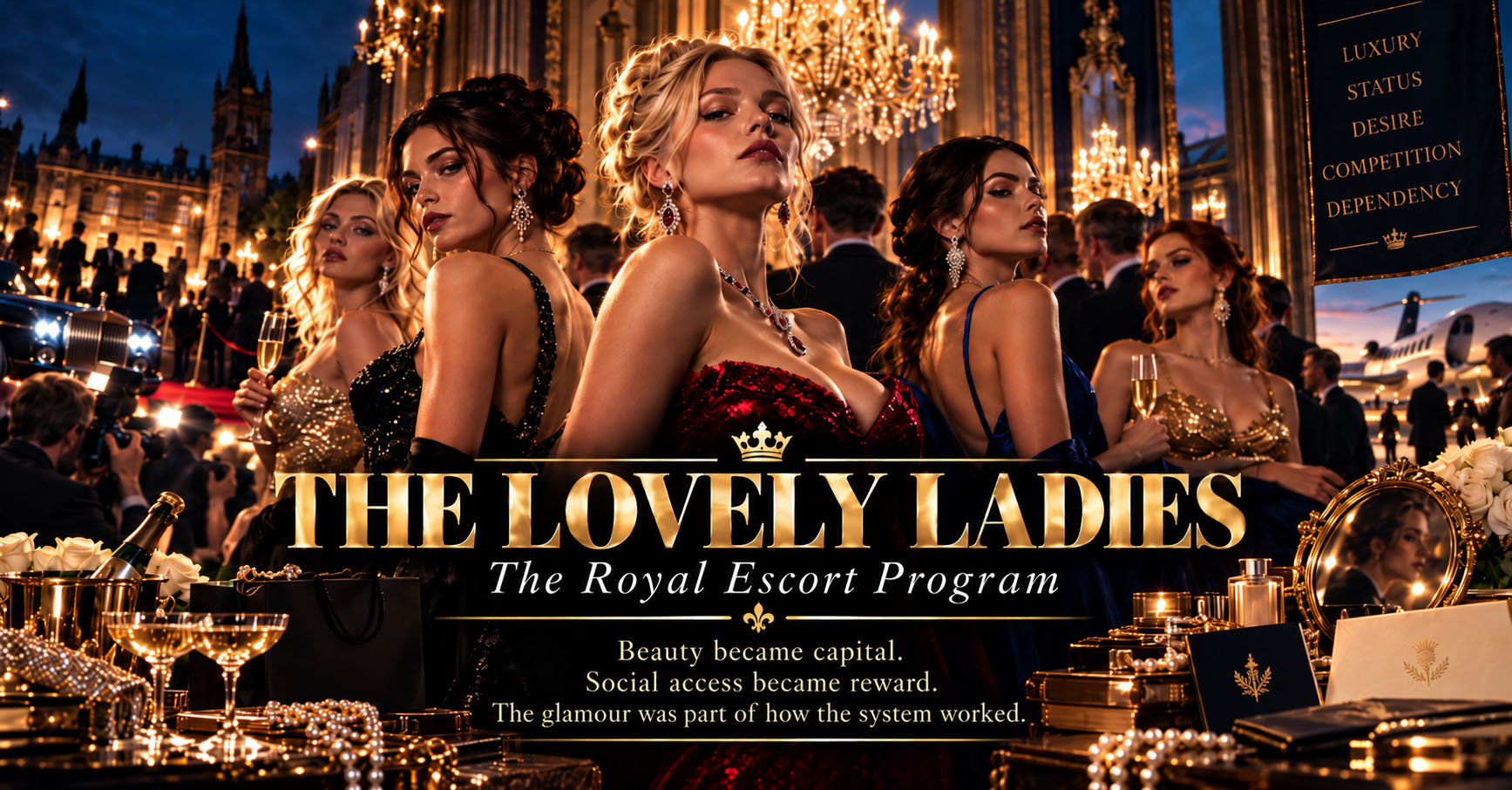
Beauty became capital.
Sexual desirability became currency.
Social access became reward.
And the more the organization invested in someone, the more ownership and obligation could become intertwined with what initially appeared to be opportunity.
Sexual training also formed part of the culture Victoria witnessed.
Epstein and Ghislaine Maxwell instructed women in how to attract, please, and seduce men, using interactions with Epstein himself as part of that training.
The sexual training went beyond ordinary ideas of seduction. Victoria recalls Epstein and Maxwell claimed to have studied sexual mythology, erotic practices, and fantasies — including the legendary figure of the succubus — as part of an effort to develop women they believed could satisfy virtually any sexual desire a man might have.
Epstein presented this training as another benefit of belonging to the system: even if a woman eventually moved on, she would leave physically transformed, socially elevated, and equipped with sexual abilities he believed would give her unusual power in future relationships.
Competition between women could become intense.
Victoria watched women compete over who could appear the most desirable, the most erotic, the most sexually confident, the most provocative, and ultimately the most valuable within the environment they were entering.
Status mattered.
Appearance mattered.
Performance mattered.
And the status of the man to whom a woman gained access could become a measure of her own advancement within the system.
This is one of the reasons the world Victoria witnessed looked very different from the simplified picture of women unknowingly wandering into an unexpected sexual environment.
The women she encountered frequently appeared ambitious about entering it.
Victoria says the women she encountered in the Paris house did not present themselves as unwilling captives or behave as though they were being coerced or held there by force.
Instead, they reacted to their positions as though they had won the lottery.
They received luxury gifts, clothing, beauty products, jewelry, travel, and even cosmetic surgery intended to make them more sexually desirable.
“What more could we ask for?” was the attitude Victoria remembers them expressing.
A couple of the women told her they had already expected to work in more conventional forms of sex work, and when an opportunity like this became available, they felt they could not pass it up.
Some spoke as though working for Epstein was highly selective — something women had to apply for and earn their way into. Victoria remembers them describing a process they had gone through knowing what would be expected of them, and speaking about Epstein as though he represented the highest level of that world.
They wanted the lifestyle.
They wanted the travel.
They wanted the beauty treatments.
They wanted the material benefits.
They wanted access to powerful men.
And some regarded Epstein precisely as the person capable of opening those doors.
That does not mean exploitation was absent.
The exploitation was embedded inside the opportunity.
A woman could enter enthusiastically, enjoy extraordinary benefits, compete for advancement, and still eventually discover that the system regarded those benefits as creating obligations she could not easily escape.
The same structure that elevated a woman could also determine what happened when she ceased to be considered valuable.
Victoria later encountered a woman who described having previously occupied the elite side of Epstein’s operation. She had traveled, stayed in expensive hotels, and lived within the higher-status world associated with powerful clientele.
After gaining weight and no longer meeting the appearance standards expected of her, she said she was moved into a much lower level of the operation.
There, instead of circulating among elite men and exclusive environments, she described being confined in a house and expected to provide sexual services to men from the surrounding community.
It was from that environment that she repeatedly attempted to escape.
Her story revealed something important about the hierarchy.
Privilege within the system was conditional.
The luxury enjoyed by women at its upper levels did not necessarily mean that the organization lacked coercive power over them.
A woman who remained desirable, useful, compliant, and commercially valuable could experience extraordinary privilege.
A woman who lost that position could discover how quickly the glamour disappeared.
The system also had another purpose Victoria witnessed being discussed: influence.
Maxwell spoke about the women’s services as being so sexually compelling that powerful men would become dependent upon them. The objective was not merely to obtain wealthy clients, but to establish women around people whose decisions carried political, financial, or international consequence.
Once that dependency existed, access itself could become leverage.
Victoria heard the strategy described in direct terms: if an influential man refused to cooperate with something the organization wanted, the services to which he had become attached could be withdrawn. Maxwell believed no body could handle that.
In that model, sexuality was not merely a commodity.
It became an instrument of influence.
The women provided pleasure and companionship, but the relationships could also create access, dependency, and pressure around people exercising substantial power.
That distinction is essential to understanding The Lovely Ladies.
The glamour was not merely a disguise placed over the system.
The glamour was part of how the system worked.
It attracted women.
It rewarded competition.
It created loyalty.
It encouraged dependency.
It established standards of beauty and desirability.
It offered social elevation.
It persuaded women that proximity to powerful men represented an entirely different future.
Some actively pursued the lifestyle.
Some became recruiters or intermediaries themselves.
Some competed aggressively for status within it.
Some became financially, socially, or psychologically dependent upon it.
Some eventually wanted to leave.
Some later described themselves as victims of Epstein and Maxwell.
Those realities do not necessarily cancel one another out.
A person can voluntarily enter an exploitative system because she wants what it promises.
She can enjoy its rewards.
She can participate in its culture.
She can compete for advancement within it.
And she can still later discover that the bargain carried consequences and forms of control she did not fully understand when she entered.
That complexity is central to the archetype.
In Victor Hugo’s Les Misérables, the Lovely Ladies exist inside a world where sexuality has become commerce and where women themselves are assigned value according to what men will pay for them.
In Scotland’s Les Misérables, that same idea appears in a radically more luxurious setting.
The streets become private parties.
The cheap rooms become luxury hotels.
The working-class clientele becomes royalty, financiers, politicians, celebrities, and powerful international figures.
The clothing becomes couture.
The surroundings become glamorous.
But underneath the change in social class, the fundamental transaction remains disturbingly recognizable.
Human intimacy has acquired a market value.
Beauty has become an asset.
Relationships have become placements.
Access has become currency.
And women themselves can become commodities circulating through networks of wealth and power.
That is why The Lovely Ladies represent more than escorts alone.
They represent a culture capable of making exploitation look like elevation.
They represent women who could believe they were moving upward even while becoming increasingly valuable to a system that measured them according to beauty, sexuality, usefulness, and access.
They represent the strange intersection of ambition and dependency — the point at which luxury can feel like freedom even while creating obligation.
They represent the tragedy of a world where a woman may believe she has finally entered the life she always wanted, only to discover that the life itself has become a transaction.
The dresses were beautiful.
The hotels were luxurious.
The men were powerful.
The opportunities appeared extraordinary.
And beneath it all, human intimacy had become something that could be bought, trained, traded, rewarded, and controlled.
Within Scotland’s Les Misérables, that is the world of The Lovely Ladies — The Royal Escort Program.
That is what ultimately connects the Royal Escort Program back to Hugo’s Lovely Ladies.
The setting was different. The clientele occupied a different social world. The money, clothing, hotels, beauty, and access were far more extravagant.
But beneath the luxury remained the same unsettling question:
what happens when sexuality, intimacy, beauty, and human attachment become commodities serving the desires of powerful men?
In Les Misérables, the Lovely Ladies sing of exactly that contradiction — glamour and performance surrounding something profoundly damaged underneath: