The Archetypes Of Scotland’s Les Miserables
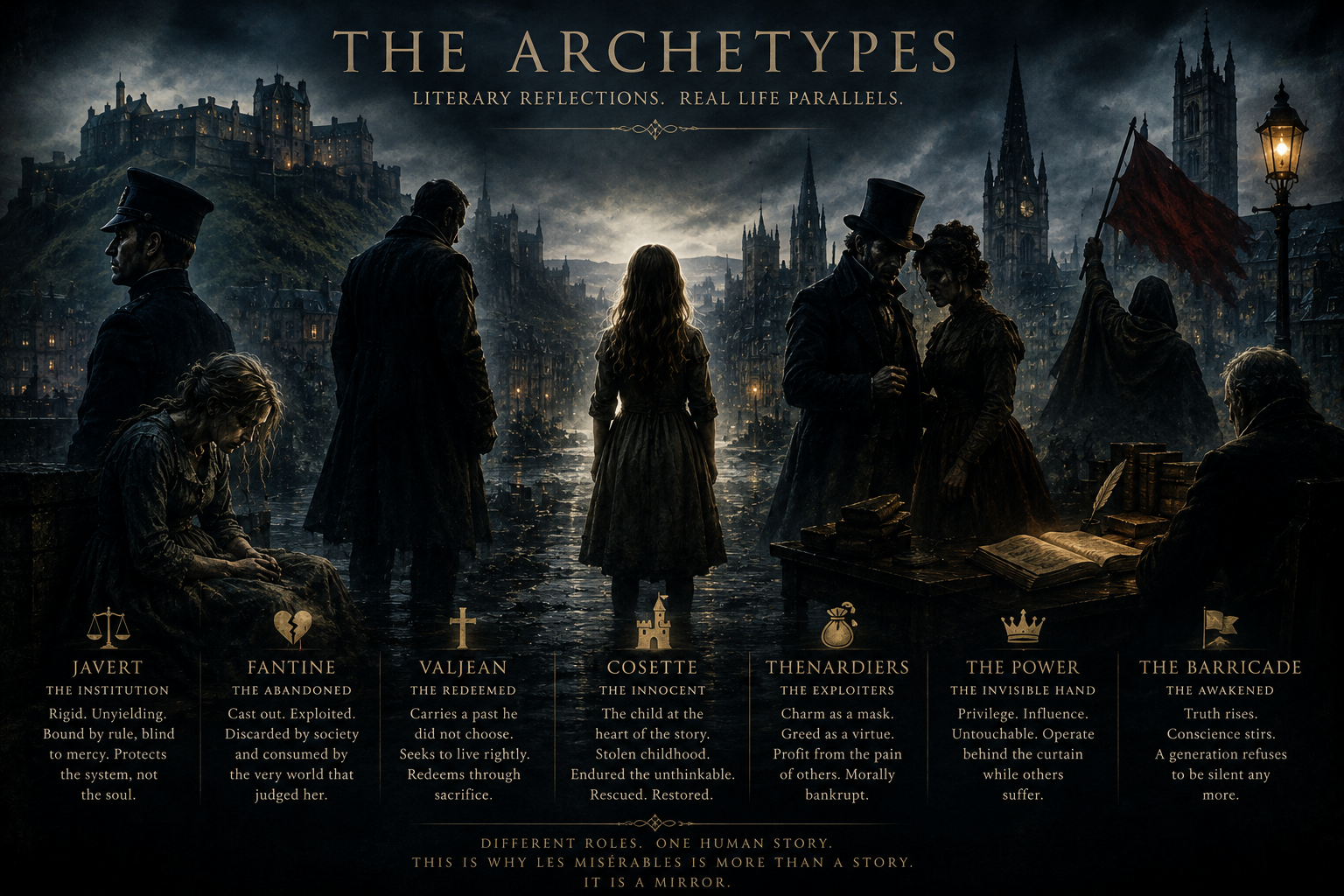
These archetypes explore how the symbolic characters, themes, and emotional structures of Les Misérables reappear within the world of Scotland’s Les Misérables.
Each section compares a character or archetype from Victor Hugo’s story with the real people, systems, spiritual conflicts, and psychological realities that inspired their modern counterpart.
Some archetypes closely mirror their counterparts in Les Misérables. Others intentionally diverge from them, become dark inversions, modern reflections or entirely new evolutions. Together, they form the emotional, spiritual, and symbolic architecture surrounding Scotland’s Les Misérables.
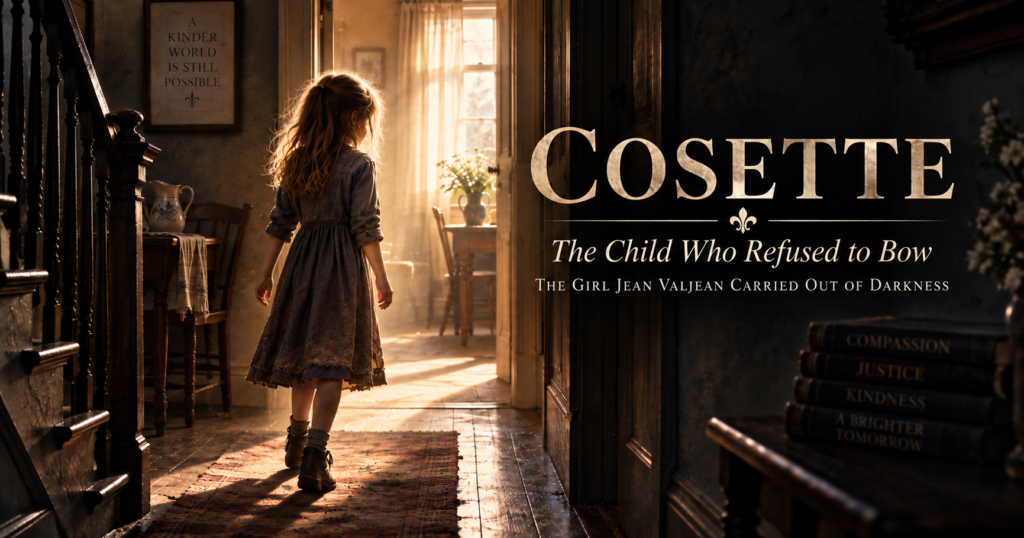
COSETTE — The Child Who Refused to Bow — The Girl Jean Valjean Carried Out of Darkness
The Child Carried Out Of Darkness. In Les Misérables, Cosette represents innocence rescued from cruelty — the child carried out of suffering and exploitation by Jean Valjean and given the opportunity to reclaim safety, dignity, identity,…
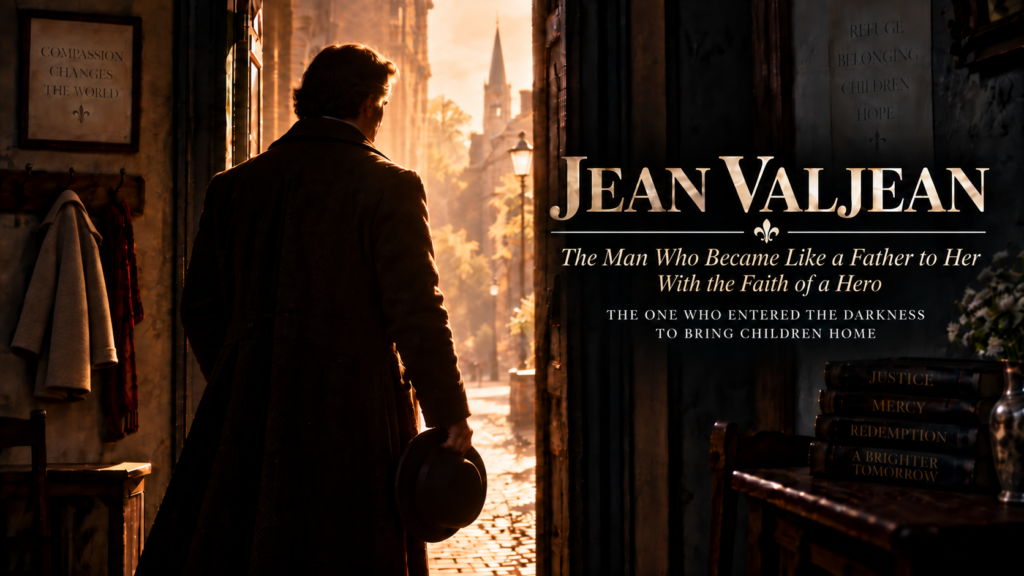
JEAN VALJEAN — The Man who Became like a Father to her With The Faith of a Hero — The One Who Entered The Darkness to Bring Children Home
The One Who Entered The Darkness To Bring Children Home. In Les Misérables, Jean Valjean represents redemption, sacrifice, moral courage, hidden identity, protective love, endurance, and the extraordinary transformation of a man who chooses compassion and…
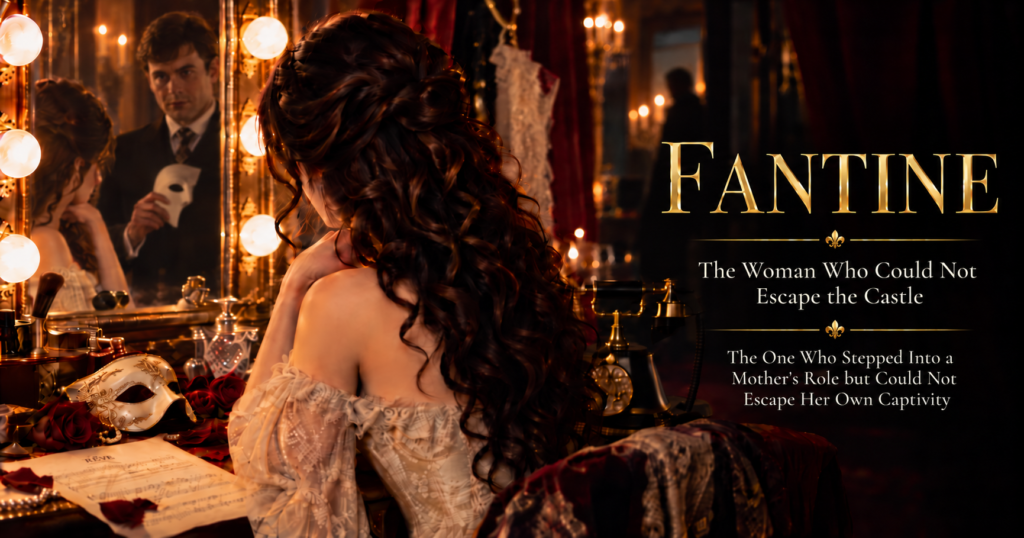
FANTINE — The Woman Who Could Not Escape the Castle — The One Who Stepped Into a Mother’s Role but Could Not Escape Her Own Captivity
Fantine’s Story Began in the World of The Phantom of the Opera. In Les Misérables, Fantine represents innocence consumed by survival — a beautiful and loving woman gradually destroyed by exploitation, abandonment, emotional suffering, social pressure,…
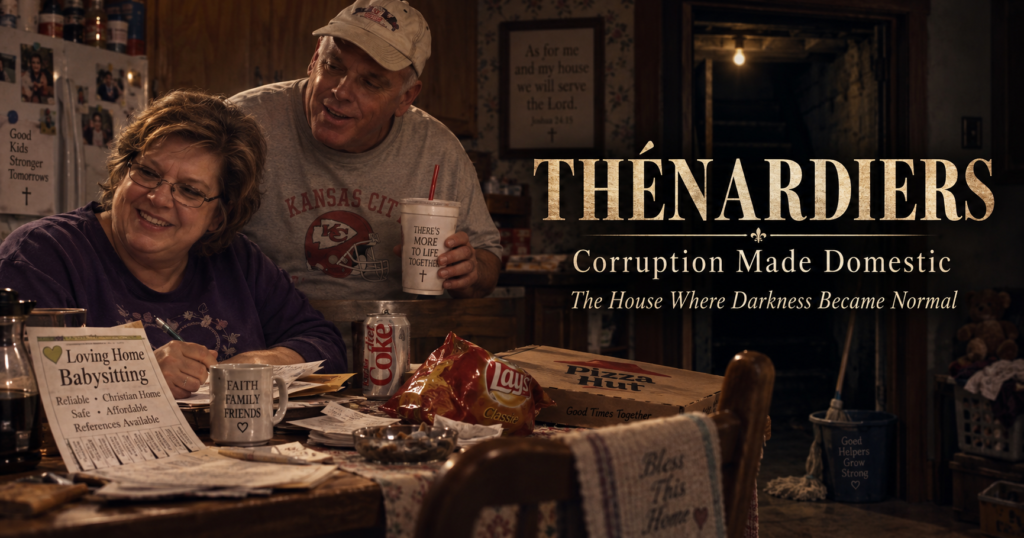
THE THENARDIERS — The Criminal Family That Held Her — Corruption Made Domestic
The House Where Darkness Became Normal. In Les Misérables, the Thénardiers represent greed, manipulation, exploitation, emotional cruelty, corruption disguised as caretaking, and the moral decay of people who survive by feeding upon the suffering of others.In…
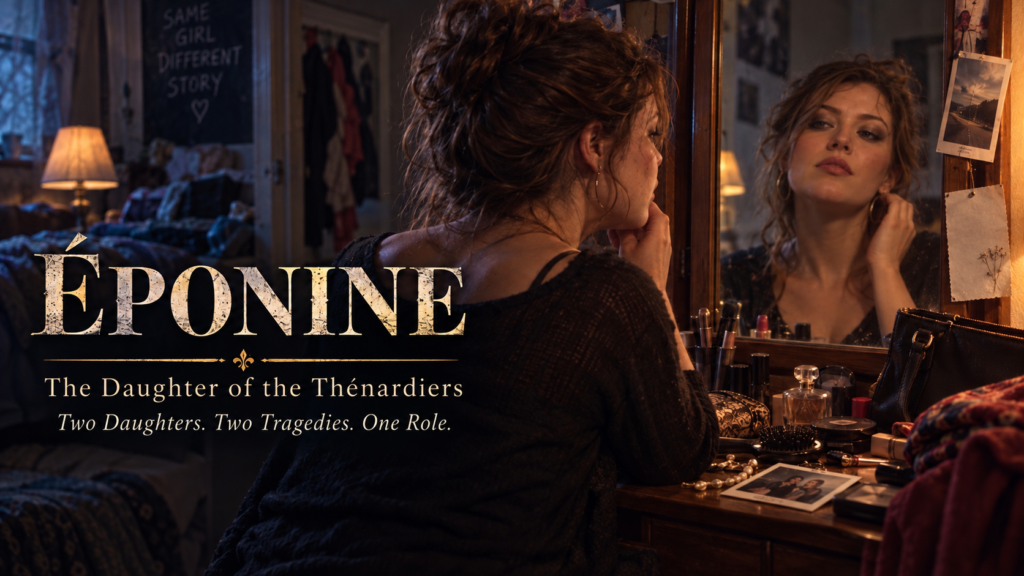
EPONINE — The Daughter of The Thenardiers — Two Daughters, Two Tragedies, One Role
Éponine — The Daughter Of The Thénardiers. In Les Misérables, Éponine represents the tragic child shaped by corruption — a young woman raised inside cruelty, emotional distortion, manipulation, poverty, and moral decay until love itself becomes…
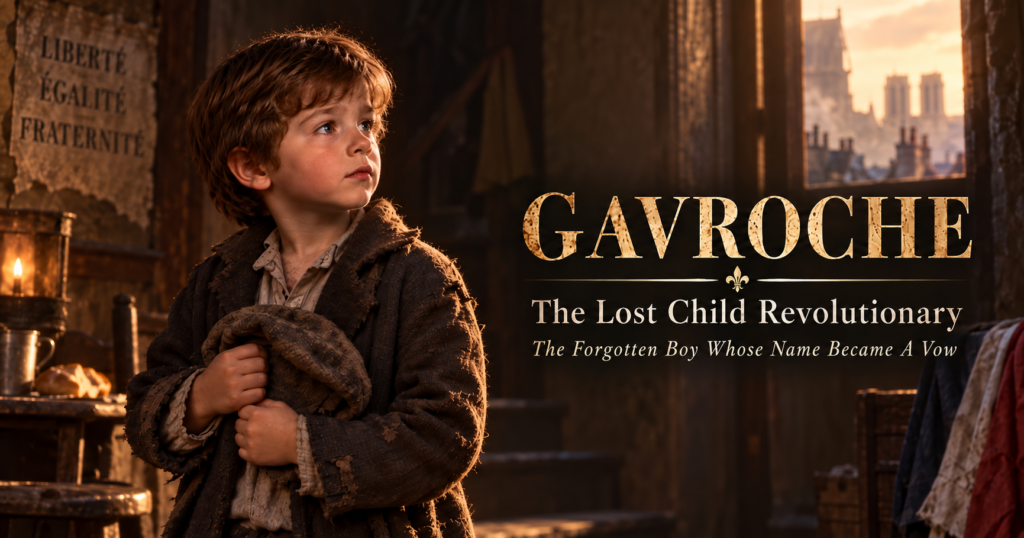
GAVROCHE — The Son of the Thenardiers – The Lost Child Revolutionary —The Forgotten Boy Whose Name Became a Vow
A 4 year old child, The son of a French Ambassador, Trafficked Out of Lebanon by Hezbollah. In Les Misérables, Gavroche represents the abandoned child of revolution — courageous, resilient, spirited, and tragically destroyed by a…
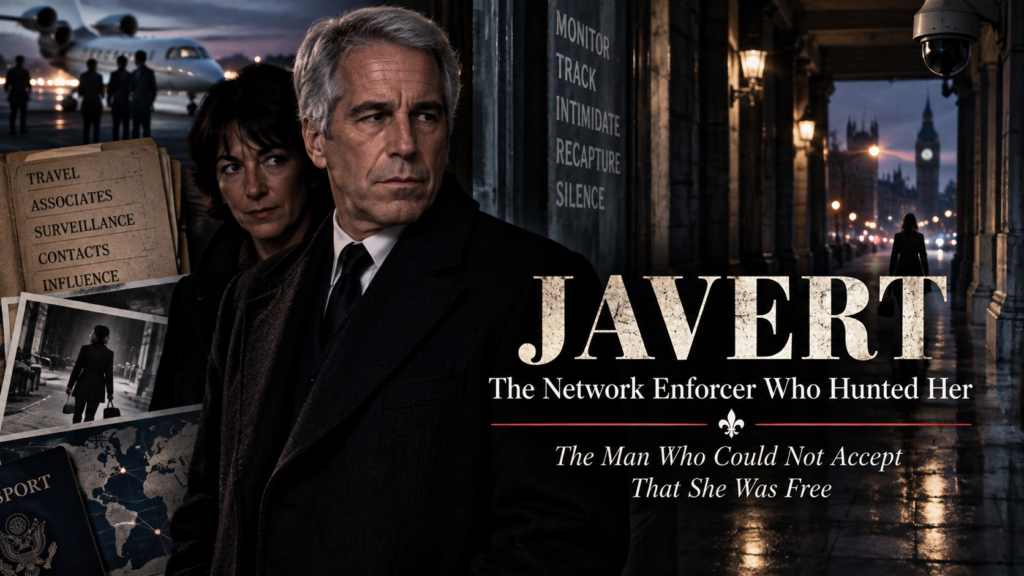
JAVERT — The Network Enforcer Who Hunted Her
The Man Who Could Not Accept that She was Free and Hunted Her Like An Animal Across Decades. In Scotland’s Les Miserables, Javert is a man inside the trafficking organization who pursued Victoria obsessively across…
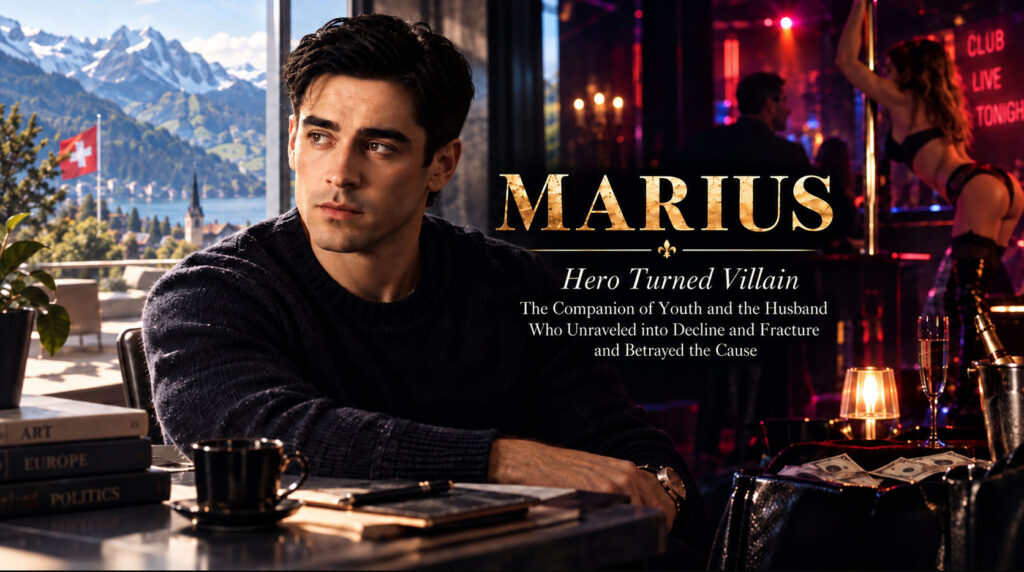
MARIUS — Hero Turned Villain —The Companion of Youth and the Husband Who Unraveled into Decline and Fracture and Betrayed the Cause
The Rescuer Who Became Part of the World He Once Opposed. In Les Misérables, Marius represents youthful idealism, romance, conviction, and the longing to build a meaningful life within the midst of revolution and upheaval.In Scotland’s…
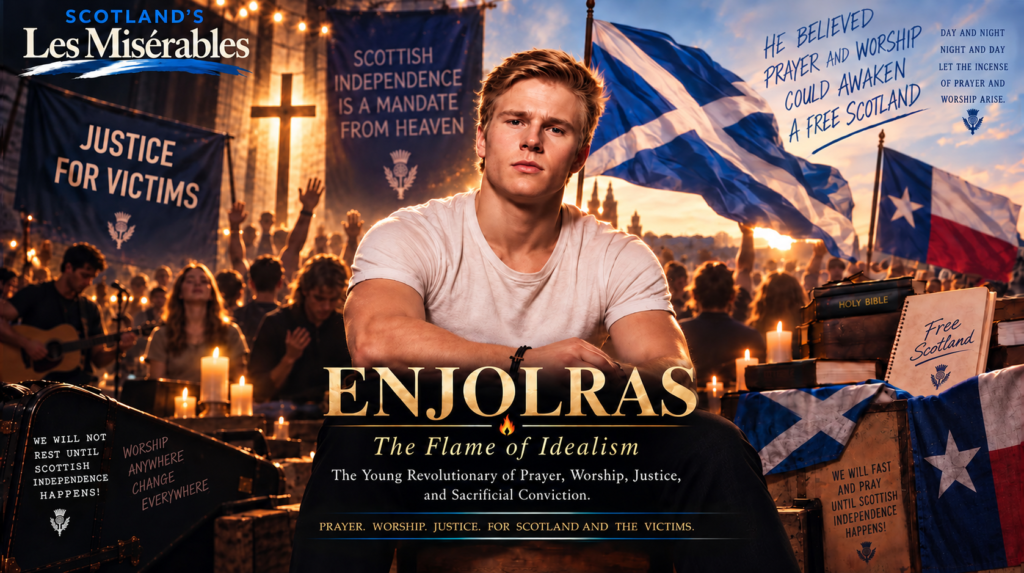
ENJOLRAS — The Flame of Idealism — Revolutionary Intercession
Robbie’s Revolution: Prayer, Worship, and a Free Scotland —The Flame Behind The Movement. In Les Misérables, Enjolras represents youthful idealism, revolutionary conviction, courage, sacrifice, and the unwavering belief that freedom and justice are worth fighting for…
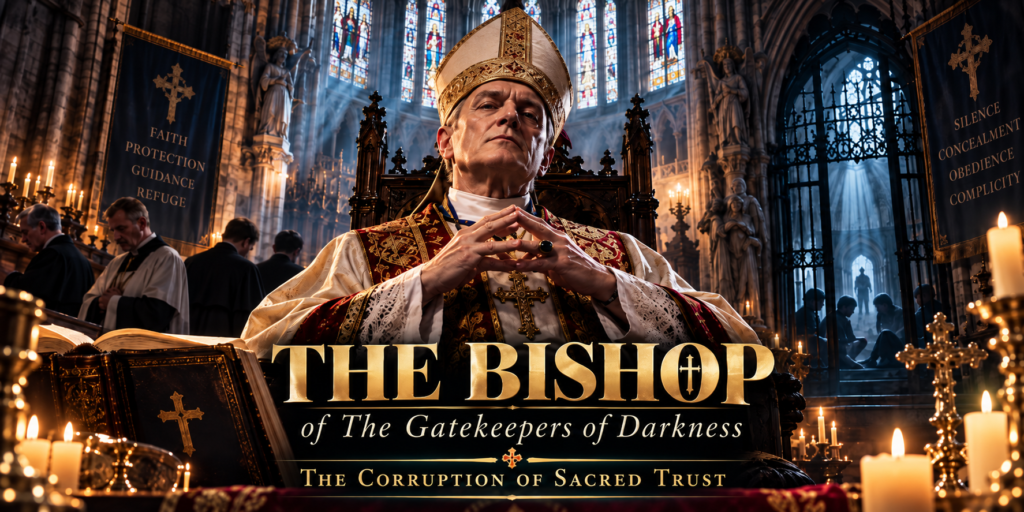
THE BISHOP — of The Gatekeepers of Darkness—The Corruption of Sacred Trust
Where Sacred Authority Became a Shield for Exploitation: The Corruption of Sacred Trust. In Les Misérables, the Bishop represents mercy, moral courage, spiritual refuge, redemption, and the belief that grace can interrupt destruction. Victor Hugo’s Bishop…
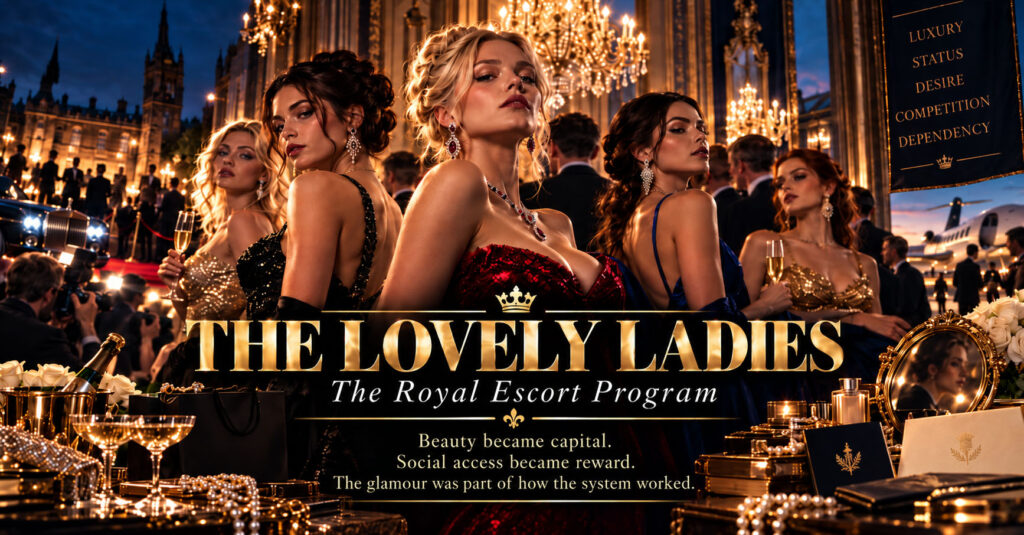
THE LOVELY LADIES — The Royal Escort Program
Beauty, Power, and the Price of Access: Where Social Elevation Became a Transaction. In Les Misérables, the Lovely Ladies represent women shaped by poverty, exploitation, survival, sexuality, and systems that gradually consume human beings while disguising…
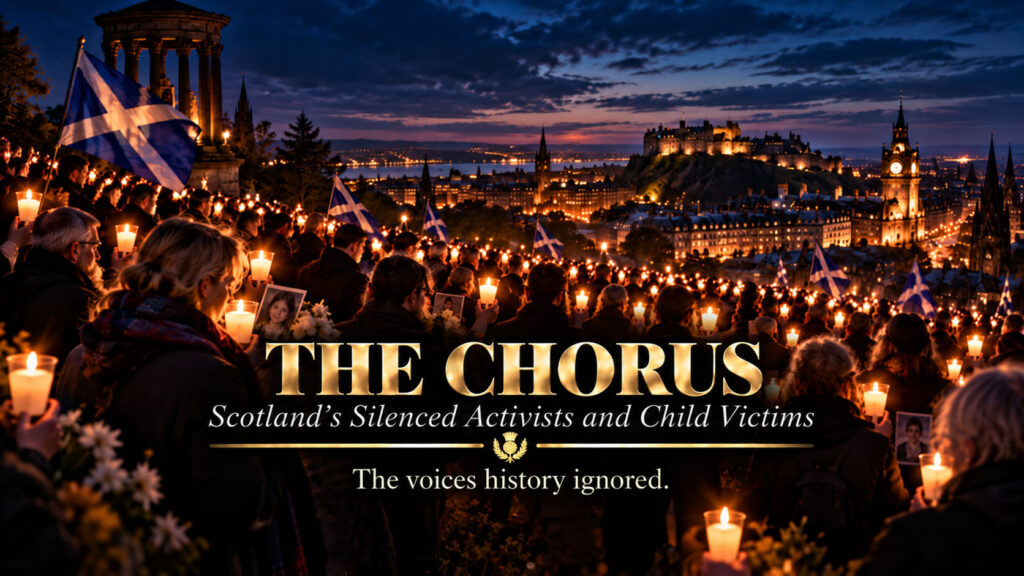
THE CHORUS — Scotland’s Silenced Activists and Child Victims
Scotland’s Silenced Voices —The Voices History Ignored. In Les Misérables, the chorus is the collective voice surrounding the story — the ordinary people whose suffering, hope, grief, hunger, sacrifice, and struggle form the emotional backdrop of…
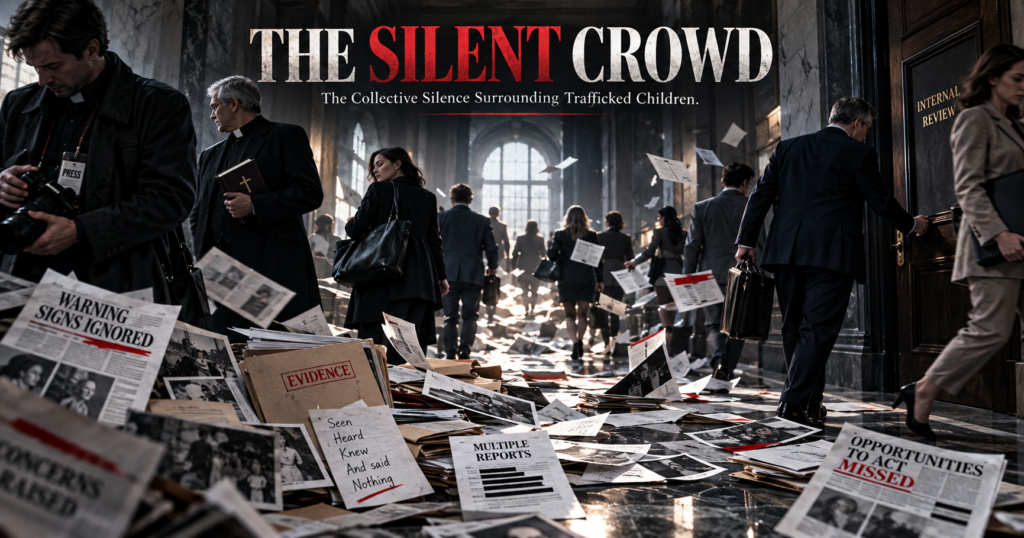
THE SILENT CROWD — The Collective Silence Surrounding Trafficked Children
Too Few Kept Asking Questions When The Fragments Began To Accumulate. In Scotland’s Les Misérables, The Silent Crowd includes the bystanders, institutions, professionals, organizations, and ordinary people who saw fragments of suffering, warning signs, abuse, corruption,…
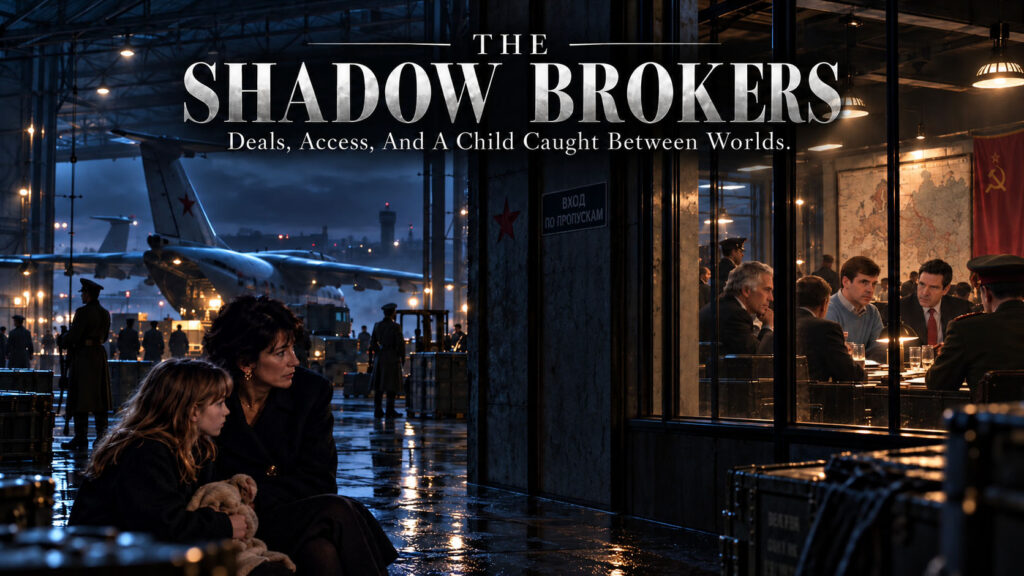
THE SHADOW BROKERS — The Hidden Hands Behind the Machinery of Exploitation
The Hidden Hands Behind Kyiv: Deals, Access, And A Child Caught Between Worlds. Kyiv, autumn 1989. The Soviet Union was still standing, but the world around it was changing with extraordinary speed. Across Eastern Europe,…
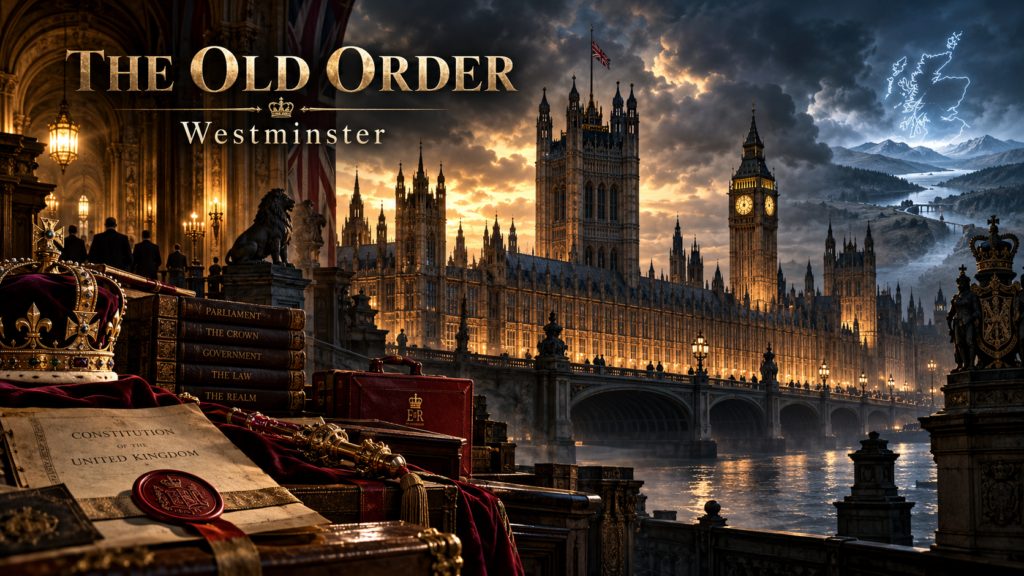
THE OLD ORDER — Westminster
The Inherited Machinery of Power: When Power Becomes Permanent. In Scotland’s Les Misérables, “The Old Order” represents the entrenched structures of monarchy, government, aristocracy, and institutional authority that protected powerful insiders while leaving ordinary people…
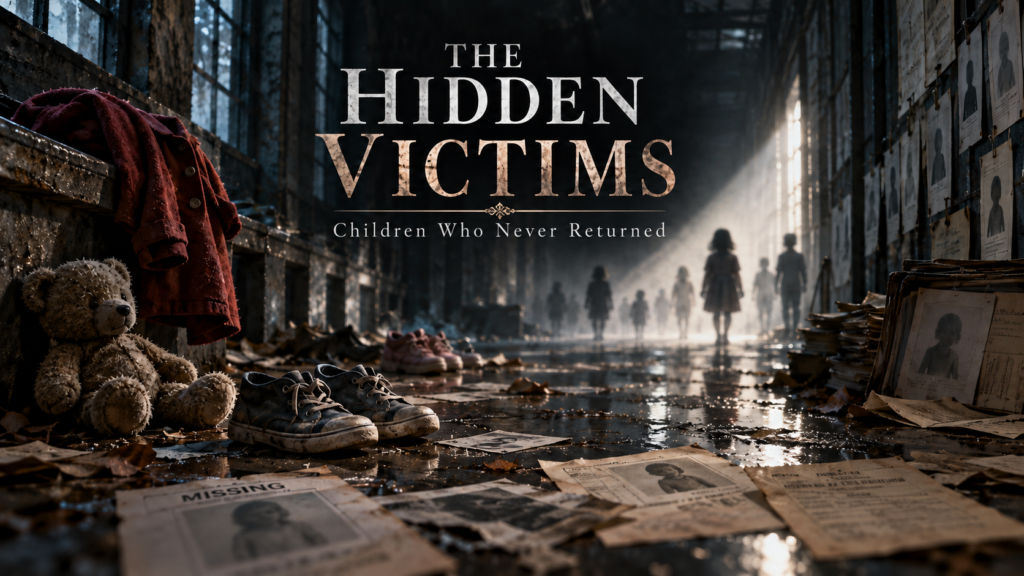
THE HIDDEN VICTIMS — Children Who Never Returned
The Children Whose Stories Never Reached the World. In Scotland’s Les Misérables, The Hidden Victims represent the countless children whose stories were buried, whose suffering never reached public light and whose silence forms the tragic…

THE BARRICADE — The Walls Scotland Could Not Break
Where Prayer and Worship Met the Machinery of Power. In Les Misérables, the barricade stands as a symbol of resistance — a desperate physical stand for freedom, justice, and the hope that suffering might one…
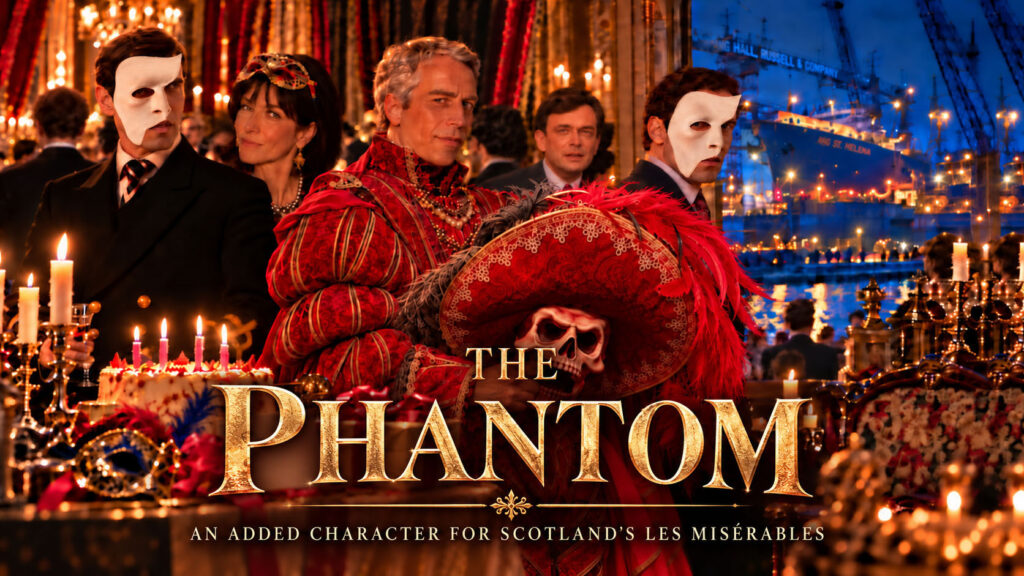
THE PHANTOM — An Added Character for Scotland’s Les Miserables
The Theatrical Disguise Used To Terrorize A Child. Victoria was first abducted on October 31, 1989, the evening Andrew Mountbatten-Windsor launched a ship in Aberdeen, Scotland, the RMS St. Helena, at the Hall, Russell &…